Freestanding Steel Garage Shelving: How an Adjustable 3-Tier Unit Compares With Other Storage Types
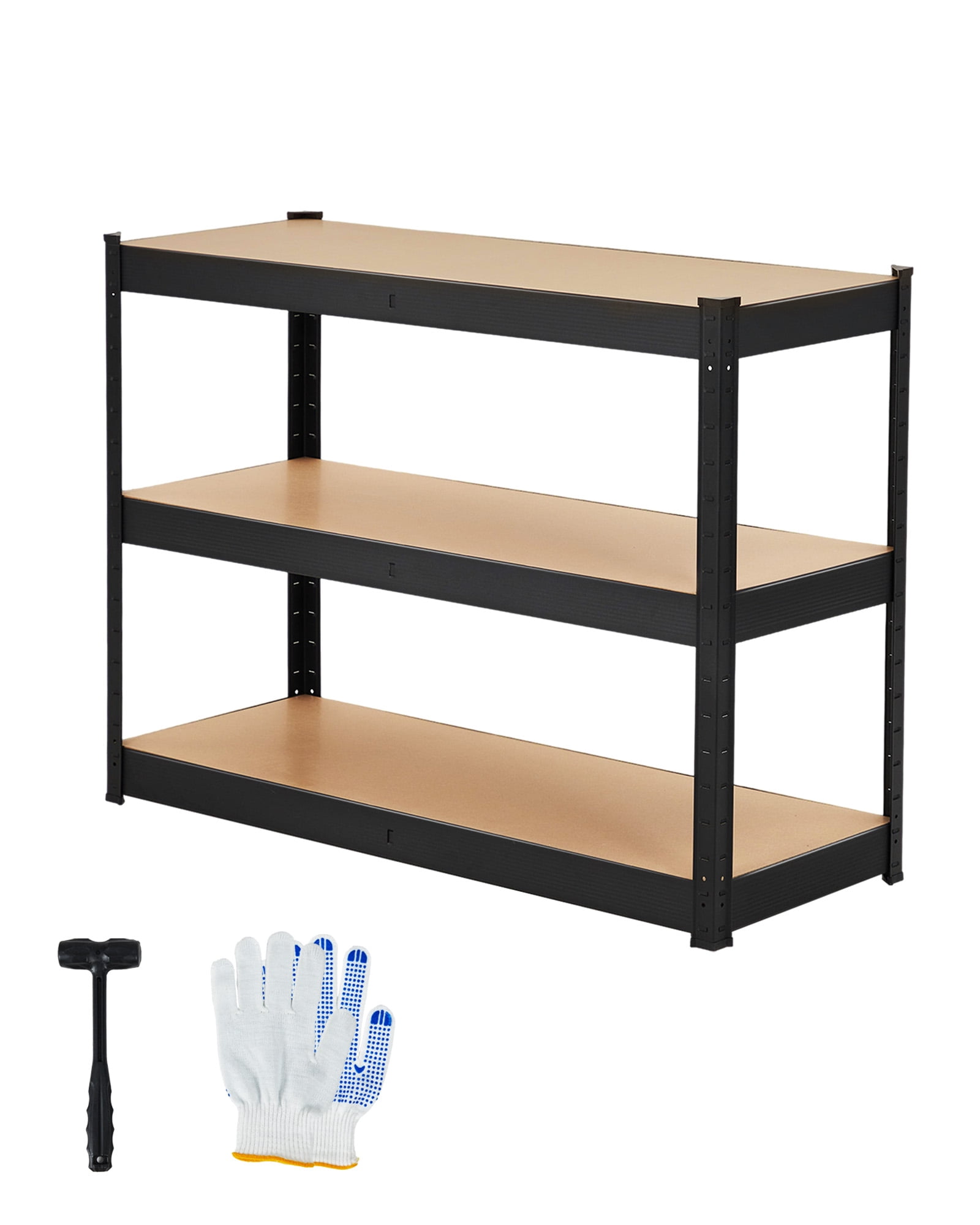
Garage floors fill quickly with bins, paint cans, tools, and seasonal gear, so many homeowners look first at open shelving before considering cabinets or wall systems. Freestanding shelving is a common answer because it stores items up and off the floor without any fixed installation. This black 3-tier adjustable unit is a steel-frame example of that category, and the sections below explain where it fits and what you give up by choosing it.
Contents
Where Freestanding Shelving Fits in Garage Storage
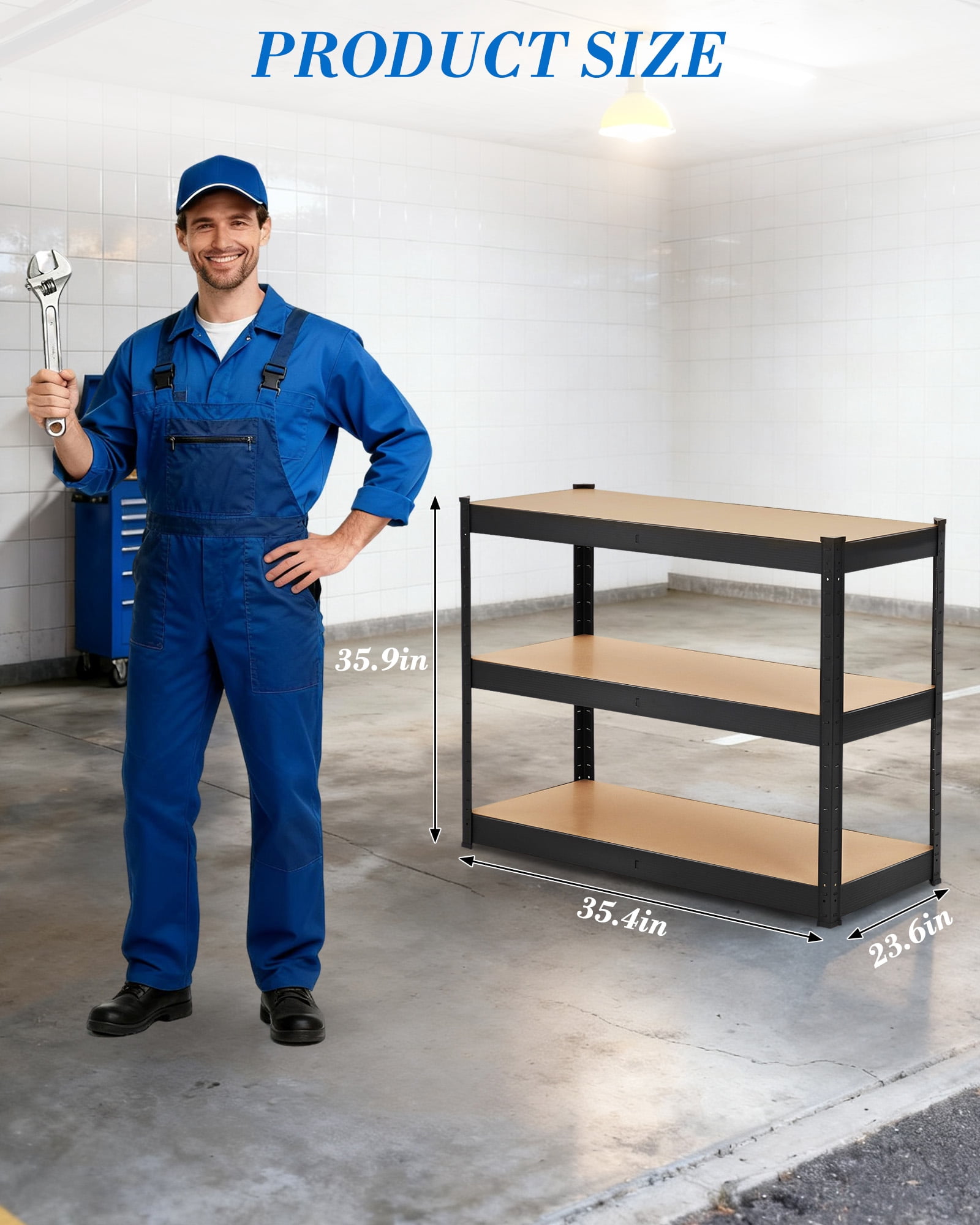 Garage storage usually falls into a few broad groups: wall-mounted rails and hooks, enclosed cabinets, rolling tool chests, and open freestanding shelving. Open freestanding shelving sits in the middle of that group. It is a standalone frame that stands on the floor, so it does not need wall studs, anchors, or a fixed mounting location. This listing classifies the unit as freestanding, with three shelves and a black finish, and the product information recommends it for garage and pantry use. That placement suits a rented garage, a finished space you prefer not to drill into, or a room where the layout changes often. The adjustable shelves are what separate this format from fixed shelving. The description says the shelves reconfigure without tools, so the same frame can hold tall paint cans on one level and small bins on another. The product information lists overall dimensions of 38.19 x 23.60 x 35.90 inches, and the assembled weight is 32.67 pounds, a figure that matters if you plan to move the unit after it is set up. The listing describes the frame as steel, while the specification sheet calls the shelves metal and the description mentions reinforced MDF panels, so confirm the shelf material before you decide. Wherever it sits, this is open, floor-standing storage: it keeps items visible and within reach, but it also leaves them exposed to dust and moisture that an enclosed cabinet would block.
Open Metal Shelving Compared With Other Storage Types
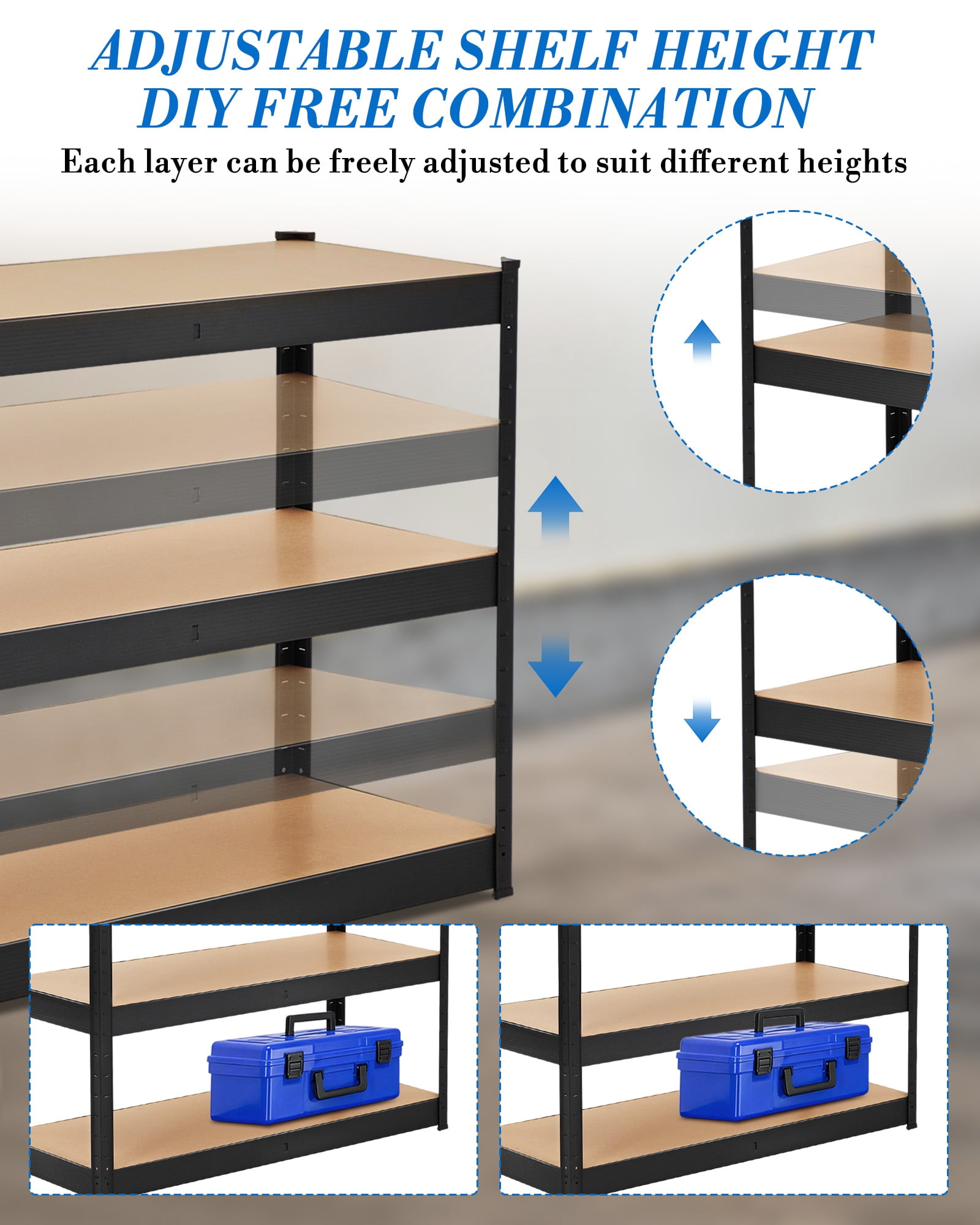 Freestanding open shelving trades a few things for its flexibility, and the useful comparison is with the other storage types a garage owner usually considers. Compared with wall-mounted shelving, a freestanding frame does not depend on wall studs or masonry anchors, which makes it easier to place in a rented garage, a shared workshop, or a space with block walls that are hard to drill. The trade-off is floor space. Every freestanding unit occupies a footprint that wall systems leave open, and the 23.60-inch overall depth will project into a walkway if the unit sits close to a door or a parked car. Compared with enclosed steel cabinets, open shelves let you see contents at a glance and reach items without opening doors, but they offer no protection from dust, moisture, or pests, and anything on a shelf is exposed to accidental knocks. Compared with plastic resin units, a metal frame generally feels more rigid under heavy bins, though steel can rust in damp conditions. The description says the frame is engineered to resist rust, which is a manufacturer claim to test against your own garage climate. Compared with fixed wood shelving, adjustable steel lets you change shelf spacing when your inventory changes, but a metal frame cannot be trimmed or refinished to suit a room, so the black finish is what you get. Adjustability is the main reason to choose this format over fixed units. The same feature has a limit, because a tall freestanding frame can tip if loaded unevenly, so heavy items belong on the lower tier and the top level suits lighter boxes you can lift down easily. Reaching the top shelf without a step stool also becomes harder as the shelves climb, which matters if you store seasonal items up high. In short, freestanding open steel suits buyers who value flexibility and easy placement more than enclosure or a built-in look.
We may earn a commission from purchases made through this link. Price and availability are not tracked on this site.
Measurements and Checks to Make Before You Buy
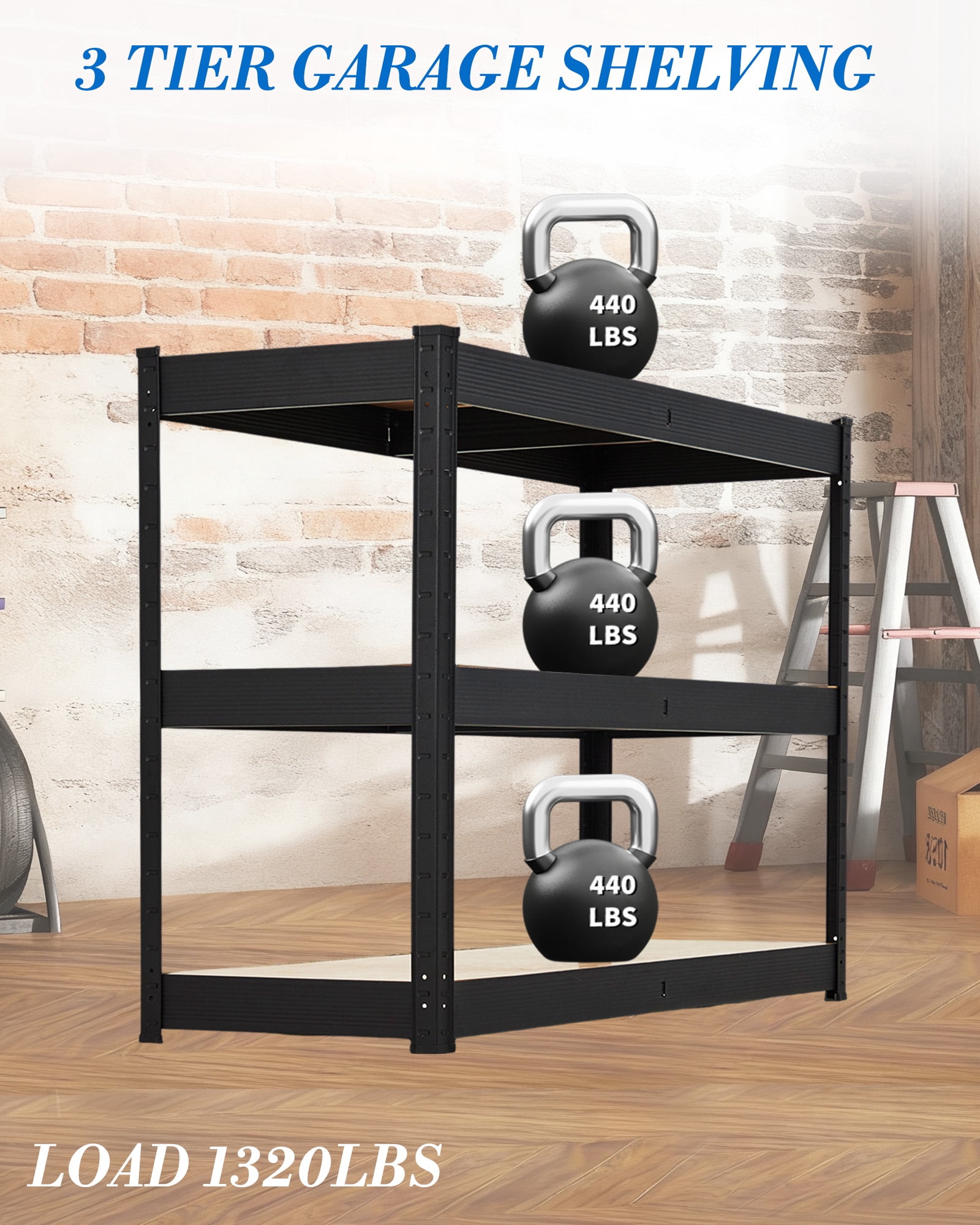 Start with the space rather than the product. The listing gives overall dimensions of 38.19 x 23.60 x 35.90 inches, so measure the exact floor footprint, the clearance above it to the ceiling or garage door tracks, and the walking path you need to keep open. Other parts of the listing use different sizes: the title cites 36x18x36 inches, and the description refers to a 48x18x36 inch space-saving version. Match your measurements to the exact item you are buying. The specification sheet also lists shelf depth as 1 inch, which does not match the overall depth and is likely an error, so confirm the usable shelf depth before planning what will fit. Load ratings need the same care. The listing contains several different load figures, and the per-shelf entry is clearly not a usable rating, so do not plan around any single number. Look for the rated load on the packaging or in the manual, and if you cannot confirm it, keep the heaviest items, such as engine parts, bulk hardware bins, or dense supplies, off the shelves. Distribute weight evenly across each shelf rather than concentrating it at one end, and place the heaviest containers on the lowest tier. Assembly is required. The description says all hardware, a rubber mallet, and assembly gloves are included and that no power tools are needed, which you should confirm when you unpack the box. At 32.67 pounds assembled, the unit is practical to move with a helper, so choose the final location before you start, because repositioning a loaded frame is harder than moving an empty one. The description mentions non-slip rubber pads on the feet for floor protection and stability on uneven surfaces, but a slightly out-of-level floor can still make a tall frame wobble, so check level with a bubble level before loading. The listing recommends the unit for garage and pantry rooms and for both commercial and home use. It does not list a written warranty, so review the seller's return and support terms separately. Finally, confirm that the black finish and shelf material match your expectations before you commit.
Choosing open, freestanding steel shelving means accepting a floor footprint and open exposure in exchange for adjustable, visible storage that does not need a fixed installation. If your garage has clear floor space that you have measured in advance, and you are prepared to keep heavy items low and verify the load rating yourself, that trade-off fits a working garage well.