Reclaim Your Garage Floor With Overhead Ceiling Storage
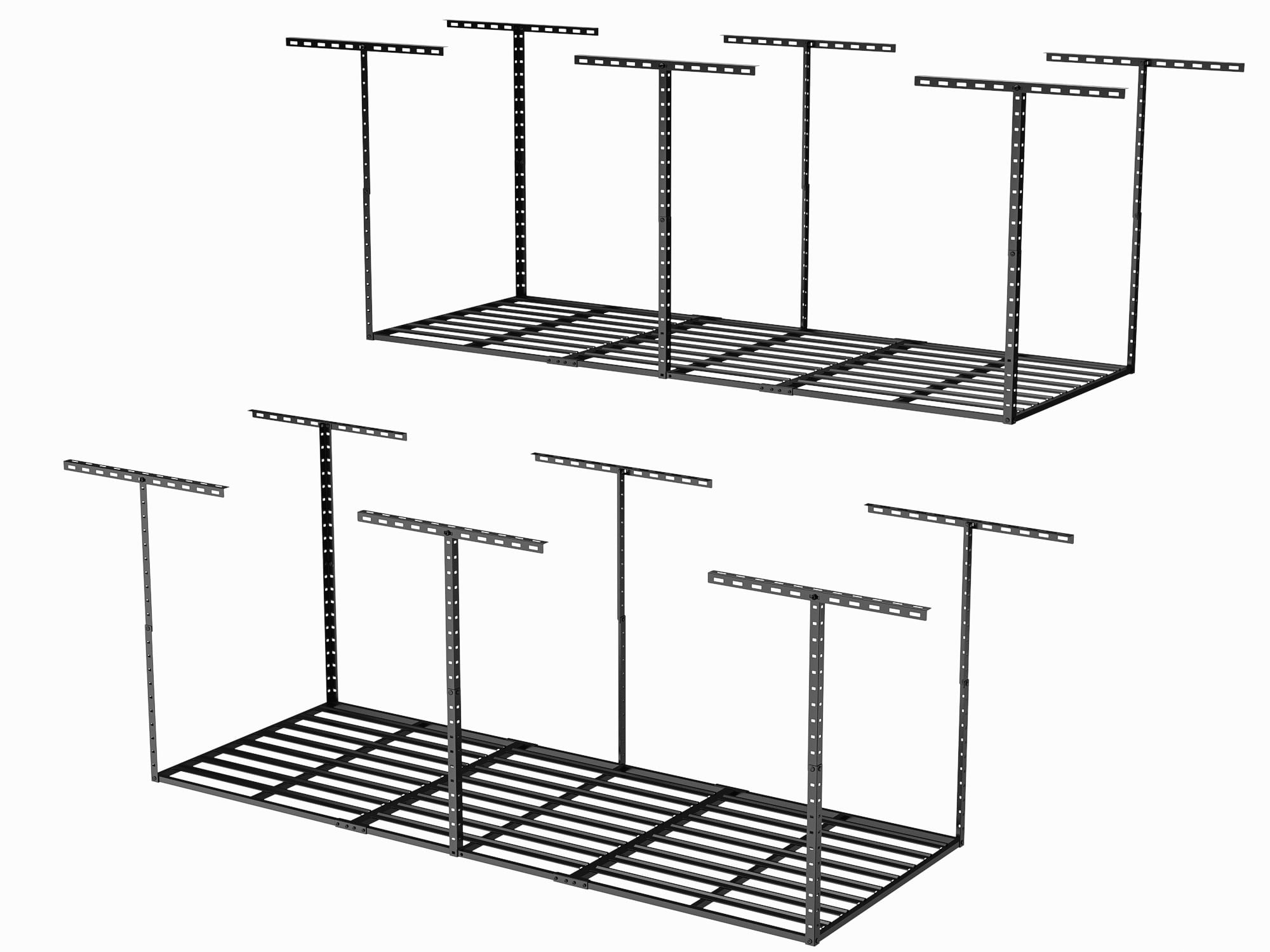
Garage ceiling storage racks transform wasted overhead space into functional storage without eating into your floor plan. When floor space is at a premium or you're juggling seasonal gear, bikes, and tools, moving items upward frees up room to park vehicles or work. A two-piece overhead rack system offers the horizontal coverage to handle multiple categories of belongings at once.
Contents
The Right Home and Skill Level
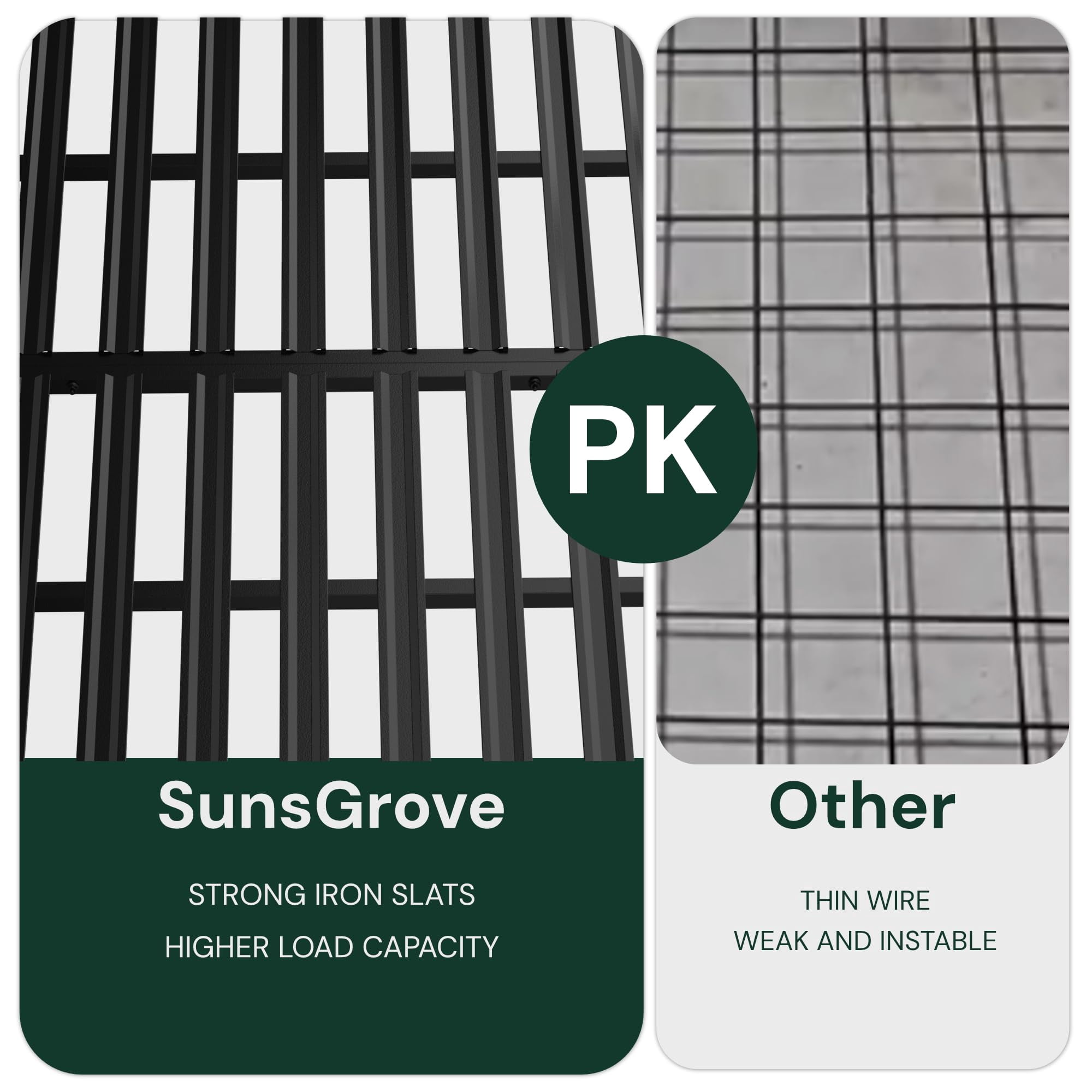 This overhead storage system fits homeowners who want to reclaim their garage floor without elaborate installations or expensive custom builds. The two-piece setup covers a 3-by-8-foot footprint, which translates to 80 cubic feet of usable volume—enough space to stash seasonal holiday decorations, bicycles, and off-season sporting equipment all at once. If your garage measures between 22 and 40 inches from floor to ceiling (the adjustable height range), the rack adapts to your space rather than forcing you into a fixed configuration. The cold-rolled steel construction means no flimsy wire grids or narrow bars that sag under real weight; instead, you're working with 2-inch-wide integrated slats that provide a solid platform for boxes and equipment. Assembly falls squarely in the DIY range—numbered components and a straightforward manual mean most homeowners can mount this without hiring help, though you'll need basic tools and a stud finder if you're mounting into wood. The reinforced crossbeams and 8mm-thick screws are engineered to prevent wobble, so once assembled, the rack stays put even as you load and unload items. The hammertone paint finish doesn't just look professional; it actively resists corrosion and wipes clean without special treatment, reducing long-term maintenance. If your garage has wood stud or joist ceilings, or concrete walls to anchor into, you're compatible with this system. The 800-pound weight capacity means you're not guessing about safety margins—you can rely on that capacity for moderately heavy storage without structural sag. This setup makes sense for any homeowner treating their garage as both a parking space and a storage hub.
Ceiling Requirements and Storage Limits
 Not every garage ceiling is suitable, and that's the first hard truth about overhead storage. If your ceiling has a tilt angle greater than 10 degrees—common in vaulted or cathedral-style garages—the mounting geometry won't work, and forcing it invites misalignment and uneven load distribution. You'll need either wood studs or concrete walls to anchor the rotating hanging pieces; drywall-only or suspended ceilings lack the structural support to hold 800 pounds plus the dynamic shift of loading and unloading. The two-piece rack spans 8 feet, so measure your actual ceiling length before committing—a garage with 7 feet of unobstructed space won't accommodate the full system. While the 800-pound capacity sounds substantial, it's worth noting that a single unit of dense items (like a pallet of paint cans or packed storage bins) can accumulate weight quickly, and positioning matters; concentrated loads on one section strain mounting points more than distributed loads. The grid-slat design, while sturdy, doesn't offer the compartmented organization that pull-out shelving or pegboard systems provide—you're layering items directly on the surface, which works fine for boxes and bikes but complicates retrieval if you bury something small underneath larger objects. Moisture-sensitive gear doesn't belong here; if your garage lacks climate control or runs humid, electronics and wooden items can deteriorate over time in overhead storage where air circulation is limited. The adjusted height range of 22 to 40 inches limits what you can store above the rack—tall items like step ladders or lumber won't fit in the space between the rack and ceiling. Installation requires a spotter for safety and precision in finding studs or anchoring concrete properly; shortcutting the mounting defeats the entire system's engineering. The 96-by-36-inch dimensions also mean you can't partition this system into smaller, modular sections—you're committing to one unified storage zone.
We may earn a commission from purchases made through this link. Price and availability are not tracked on this site.
Seasonal Gear and Bicycle Storage
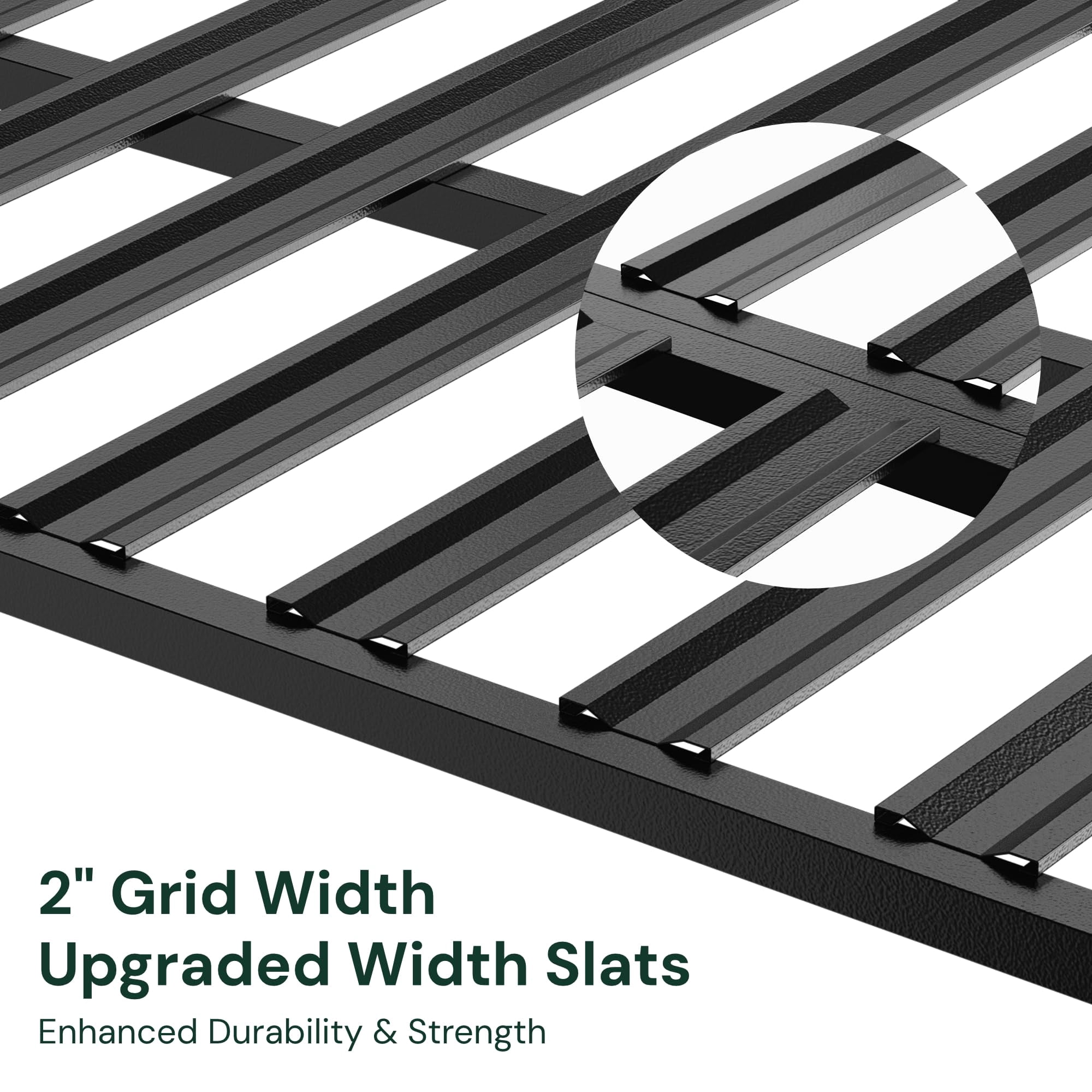 Seasonal storage is where this rack truly shines, especially for holiday decorations that need to disappear for nine months of the year. A typical household might dedicate 40 to 60 cubic feet to Christmas boxes, Halloween props, and seasonal outdoor furniture—the 80-cubic-foot capacity means this rack absorbs that entirely, leaving your seasonal gear out of sight but not unreachably high. Bicycles are a perfect candidate; whether you store two, three, or four bikes horizontally on the rack with wheel cradles, you're keeping expensive equipment secure and off the floor where car doors and tool carts might damage them. Off-season sporting equipment—sleds, skis, paddleboards, camping gear—benefits from overhead storage because these bulky, low-density items can soak up cubic footage without maxing out weight limits. The 96-inch span means you can arrange items front-to-back, allowing smaller boxes toward the front for easier access and denser or heavier bins pushed toward the back; the 2-inch-wide slat grid prevents smaller boxes from tipping through gaps. For two-car garages with tightly parked vehicles, every recovered square foot of floor space matters, and ceiling storage that doesn't interfere with door swings or vehicle headroom becomes essential. Plastic storage containers work especially well on these racks because they're lightweight relative to volume, weather-resistant, and stack predictably; a dozen standard 30-quart bins won't strain the system. If your garage doubles as a workshop, moving infrequently used gear overhead creates a clearer, safer floor for projects and assembly work. The hammertone finish means the rack itself withstands garage humidity and temperature swings without rusting, so the storage environment itself remains stable across seasons. Homes with limited basement or attic space find that overhead garage storage bridges the gap neatly, delivering proportional capacity gains at a fraction of renovation cost.
This system works best for homeowners with compatible ceilings who need to reclaim floor space and can live with height-constrained organization. It's not ideal if your garage ceiling slopes steeply, lacks solid mounting points, or if you need frequent access to deeply stacked items. For straightforward seasonal storage, bikes, and bulk equipment, the overhead rack turns wasted space into genuinely usable volume.