HBT HB7116P-KT Pneumatic Upholstery Stapler: Who Fits and Who Should Look Elsewhere
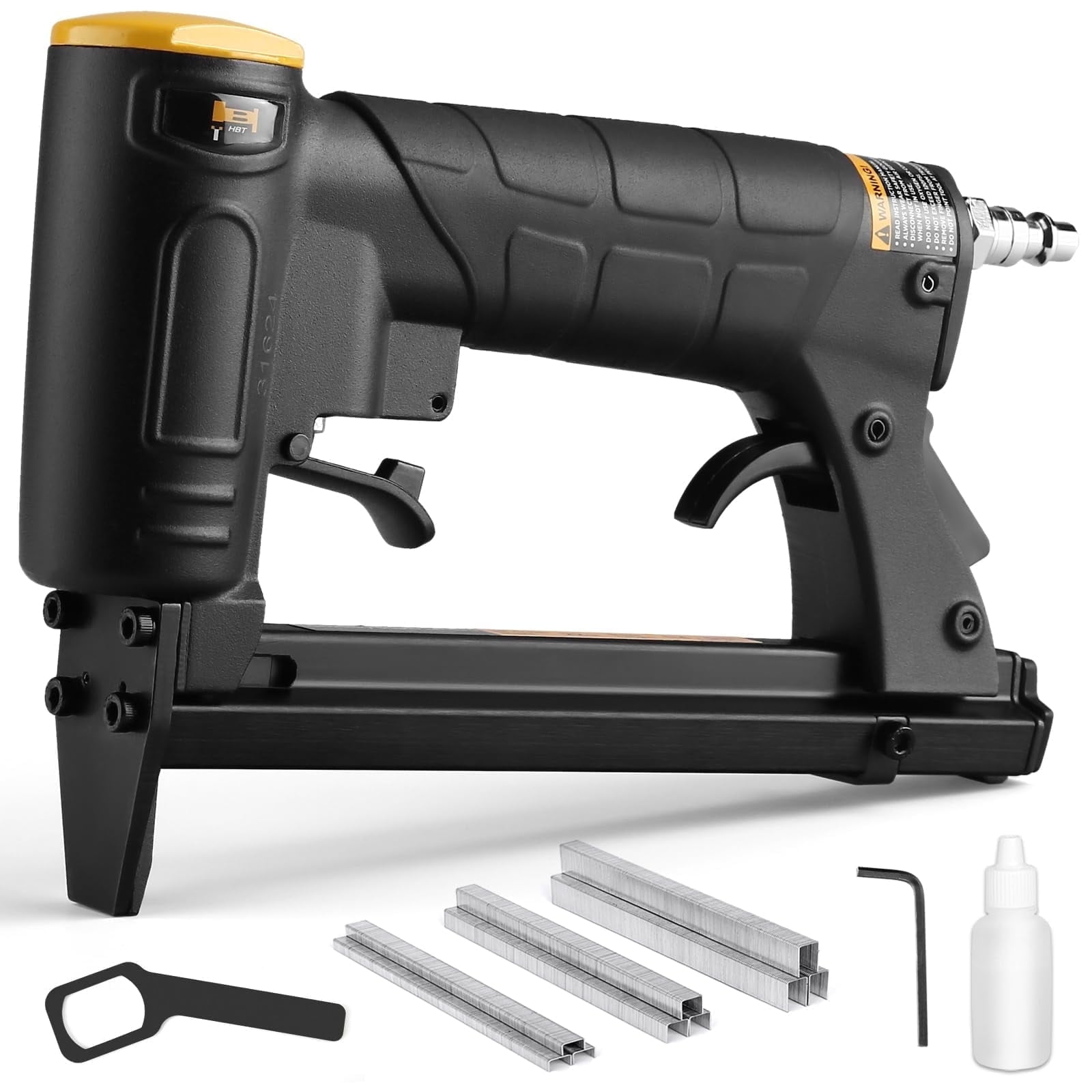
Staple guns are generally used to fasten fabric, vinyl, and thin trim to furniture and interior surfaces, where a fast and consistent fastener does more than a hammer and tack. A pneumatic upholstery stapler uses compressed air to drive each staple, so the work moves faster along long edges. This article looks at who this HBT model suits at home, where a different tool serves better, and which everyday projects it fits.
Contents
Who a Pneumatic Upholstery Stapler Suits at Home
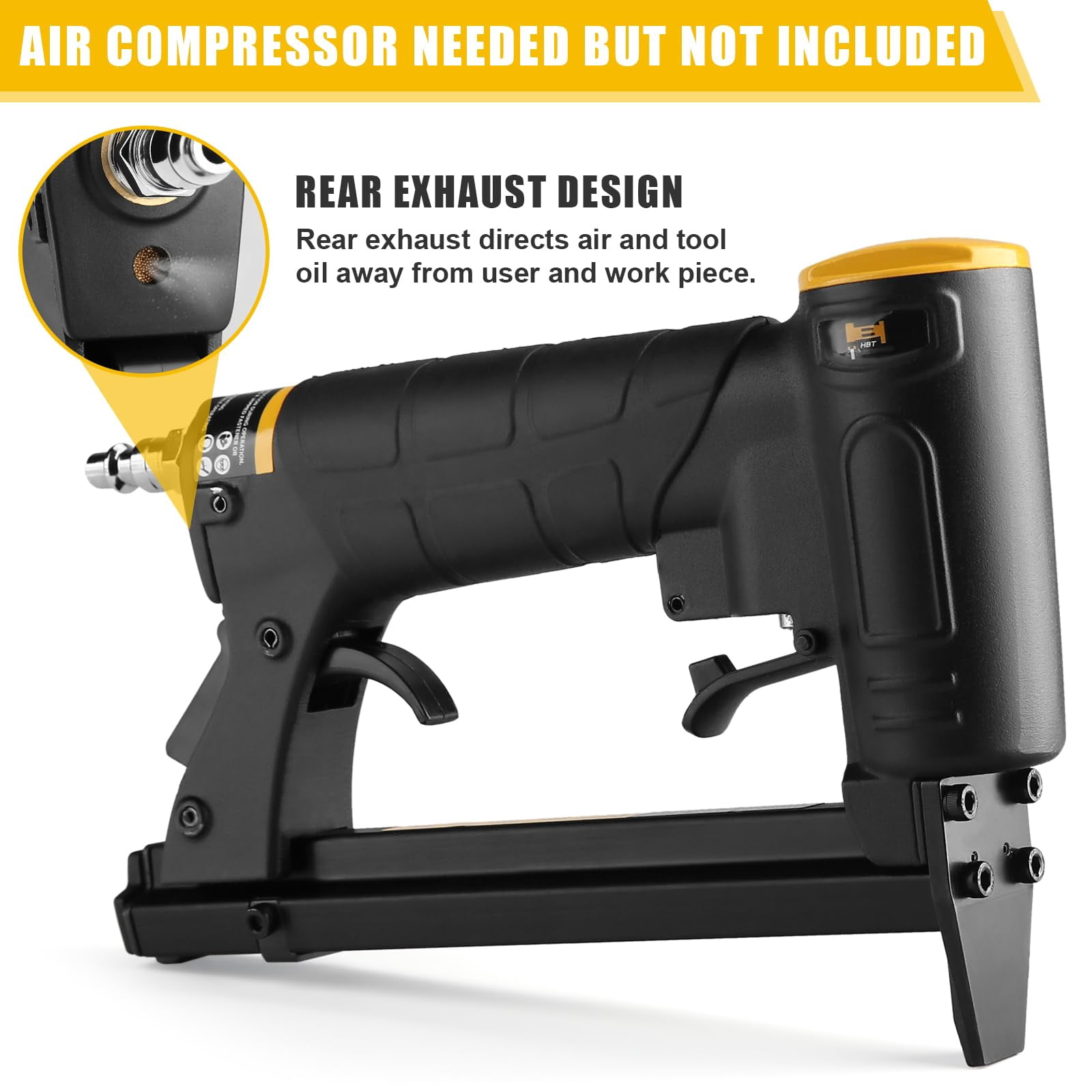 Most people reach for a staple gun when a fabric cover has come loose or a piece of door trim needs to hold in place while it is reattached. This HBT model drives 22-gauge, 3/8-inch crown staples, and that crown width suits fabric, upholstery, vinyl, and thin trim. The closest match is a homeowner who already owns an air compressor and handles a few projects each year, such as re-covering a dining chair seat or replacing the vinyl on a footstool. The stated operating pressure is 60 to 100 PSI, so confirm that your compressor and its regulator can deliver air within that range before connecting anything. Weighing under 2 pounds, with a die-cast aluminum body, the tool is a manageable weight for longer sessions of stapling along a seat frame. The ergonomic comfort grip and the ability to work with one hand help when you are reaching into tight spots, such as the underside of a headboard. Someone who refreshes a few pieces of furniture each season will find the 6,000-staple kit covers many small jobs. Beginners with no upholstery experience can practice on scrap fabric and a spare piece of plywood to see how each staple seats in the material. The accessory list includes wrenches, tool oil, and an operating manual, which covers basic upkeep between jobs. Before deciding, measure the thickness of the material and the depth of the frame you plan to fasten, because the kit's staple leg lengths run from 1/4 inch to 5/8 inch.
When a Different Stapler or Tool Makes More Sense
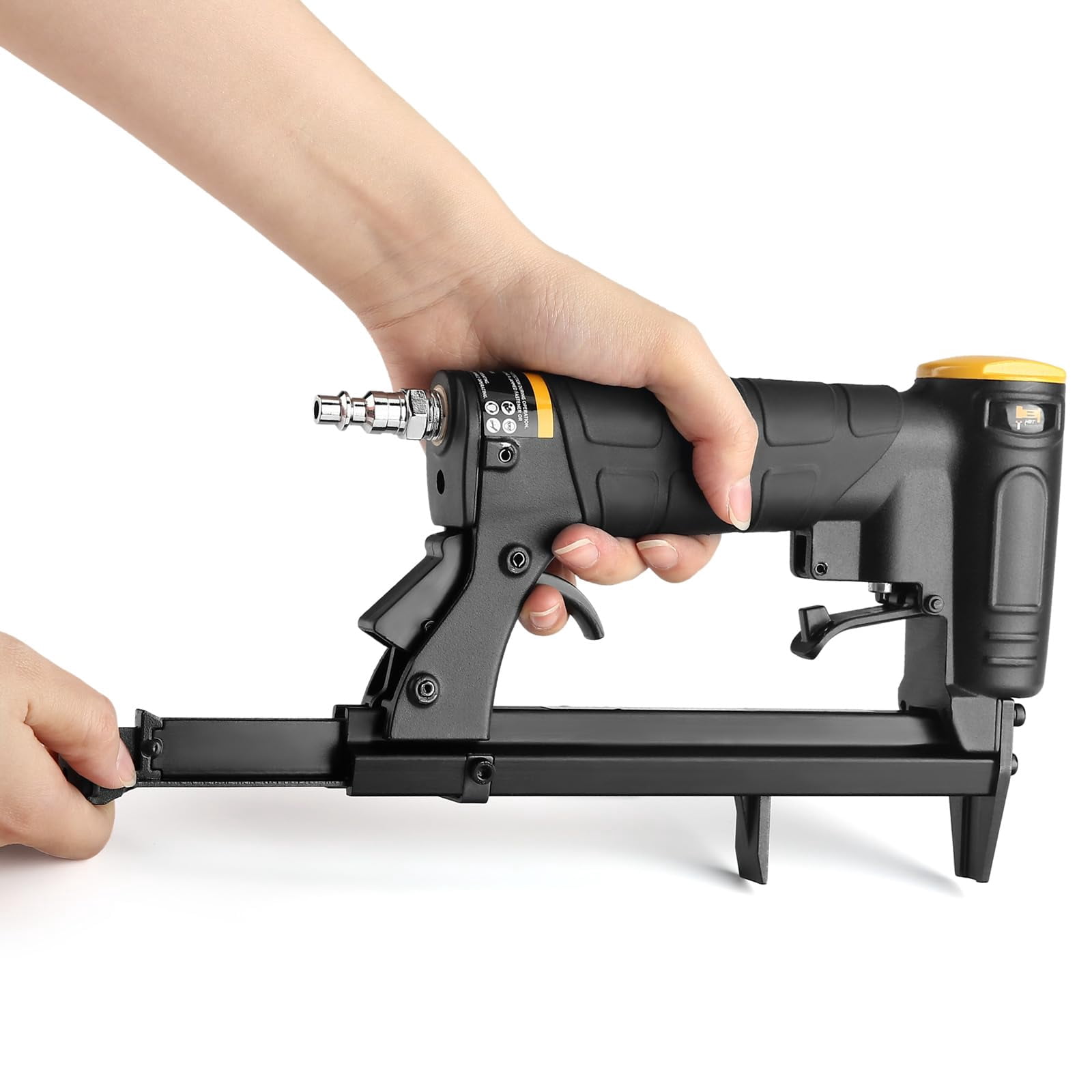 Not every fastening job suits a light-duty 22-gauge, 3/8-inch crown tool. Fabric, vinyl, and thin trim are the right materials for it, but structural framing and heavy wood assembly call for a heavier nailer, and that work is commonly handled by a licensed carpenter or contractor. The tool does not accept T50 staples, so any replacement fasteners must match the 71 Series or a similar series listed in the product data. Staple leg lengths top out at 5/8 inch, which may not suit thick padding, several stacked layers, or dense material. The HBT tool also needs an air compressor, which is not included, so anyone without one must buy or borrow a unit before the stapler works at all. A cordless or electric staple gun may be simpler for occasional jobs in a home without a compressor, although it operates differently. Someone who needs only one or two staples for a quick repair may find a hand-operated staple gun quicker to grab and put down. The kit includes 2,000 staples each of three lengths, so a project that needs only one length will leave most of the supply unused. Anyone planning to fasten into hard or thick stock should test a few staples in scrap first to confirm penetration before working on a finished piece. The tool also needs regular oiling with the included tool oil, as the manual describes, so it adds a maintenance step that a simple hand tool does not require. Those who want a no-compressor setup or a tool for heavy structural work should look at other categories before choosing this one.
We may earn a commission from purchases made through this link. Price and availability are not tracked on this site.
Projects Where This 22-Gauge Stapler Earns Its Spot
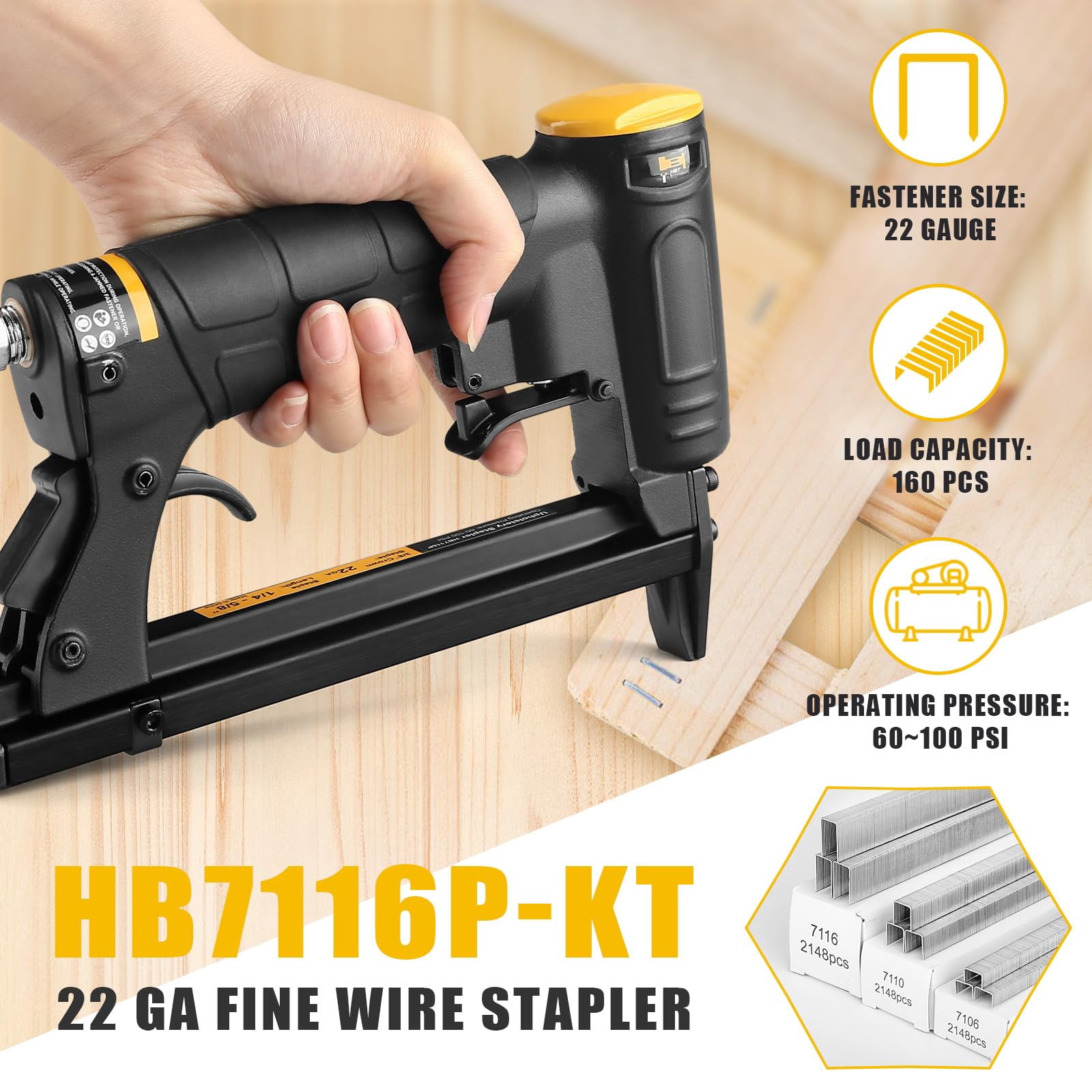 A staple gun earns its place when the job calls for many fasteners placed in a row. Re-covering a dining chair seat is a good example: the fabric must be pulled taut and held at many points along the edge, and a pneumatic trigger makes that repeated step faster than a hand-squeezed tool. Vinyl on a footstool, a bench cushion, or a headboard panel follows the same pattern, with staples set along the underside where they stay out of sight. Loose fabric on a car seat cover or a cabin trim panel falls under the automobile interior work the product data lists. Door trim that has come loose from a frame can often be secured with staples into a thin backing, provided the material is light and the staple length matches its thickness. Light-duty wood assembly, such as attaching a thin plywood back panel to a small cabinet or drawer frame, is also a listed use. In each case, mark the staple line, test a few staples in scrap, and check the leg length before running the full edge. The rear exhaust directs air and tool oil away from the user and the workpiece, which keeps the work area cleaner when stapling along a surface. The easy drop-in magazine and quick-clear jam release also make it simpler to reload and recover from a stuck staple during a long session. Because the kit ships with the staples and accessories needed to start, a homeowner can move from one project to the next without assembling a separate set of supplies.
This HBT kit suits a homeowner with an air compressor who wants a light, manually triggered stapler for fabric, vinyl, thin trim, and small wood assembly. It is less suited to structural framing, to T50 staples or staple lengths outside 1/4 inch to 5/8 inch, and to anyone who needs a tool that runs without a compressor.