Milk Fleece Winter Quilts: How a Lightweight Bed Layer Compares With Other Options
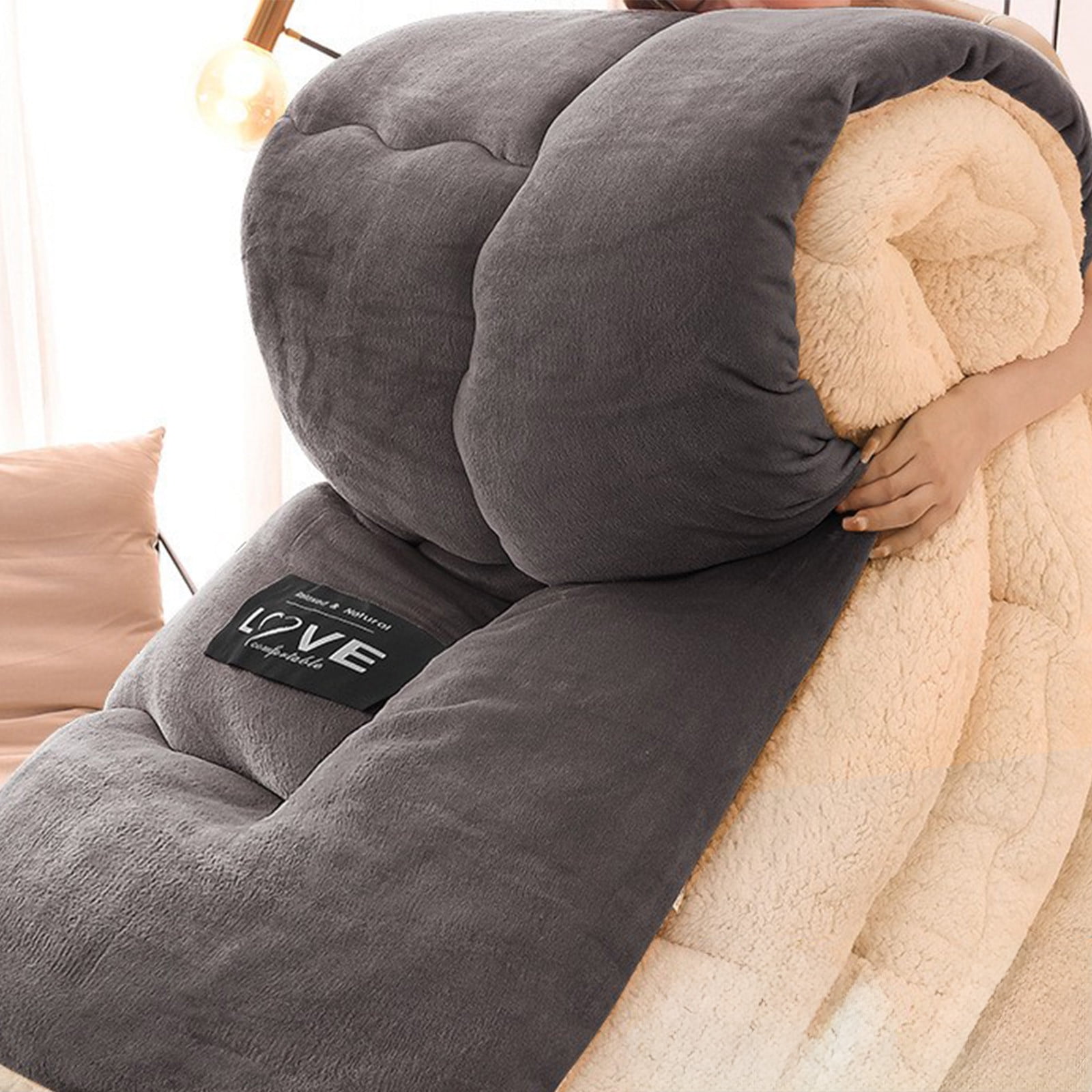
Winter bedding shoppers usually weigh heavier down comforters, cotton quilts, and lighter fleece-style coverings against each other. This DXSSXC thickened winter quilt belongs to the fleece-style group, with milk velvet listed as its fabric content and colors that the title gives as gray, blue, green, and pink. The sections below explain where it fits in that category, how it differs from neighboring types, and what to check before you decide.
Contents
Where a Milk Fleece Quilt Fits in Winter Bedding
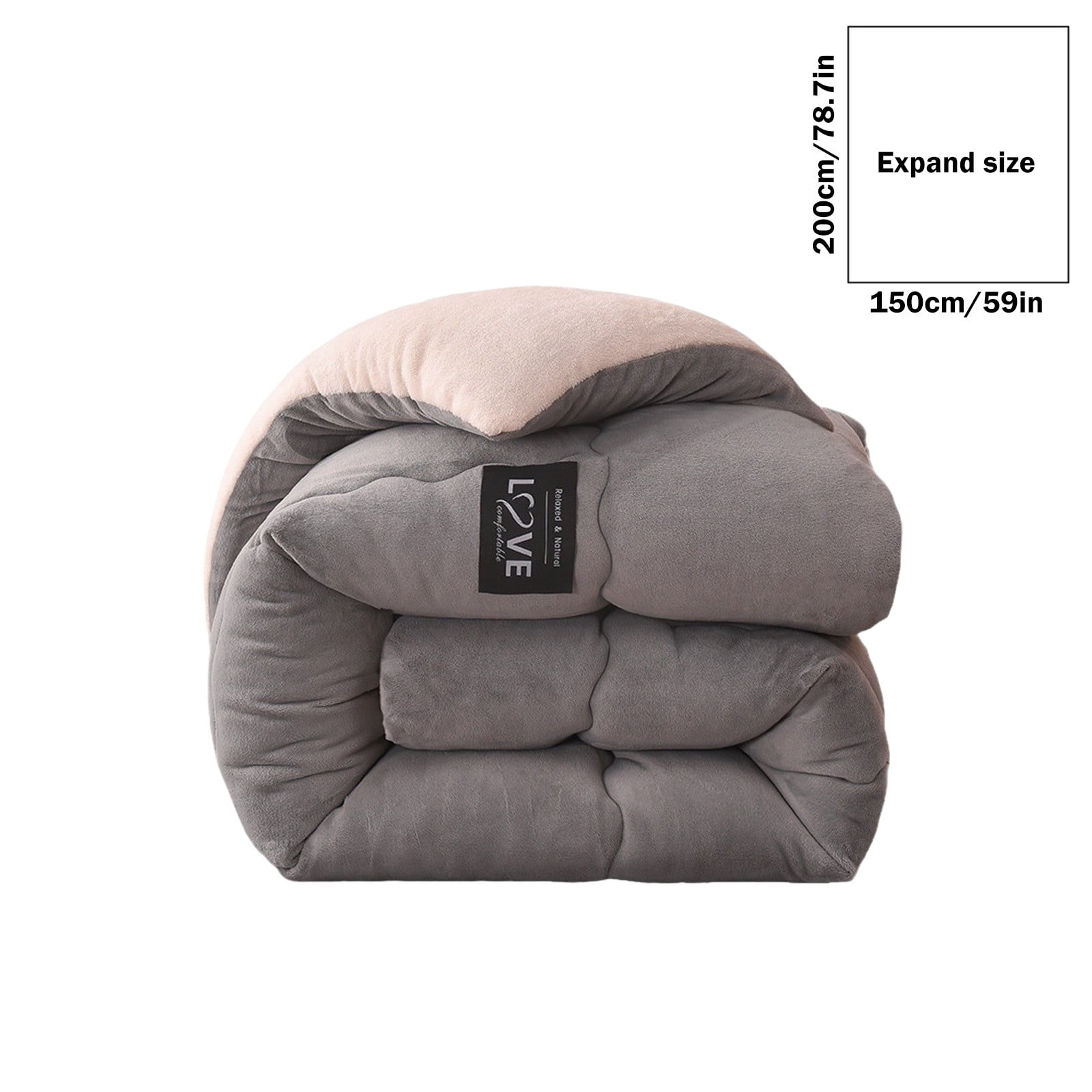
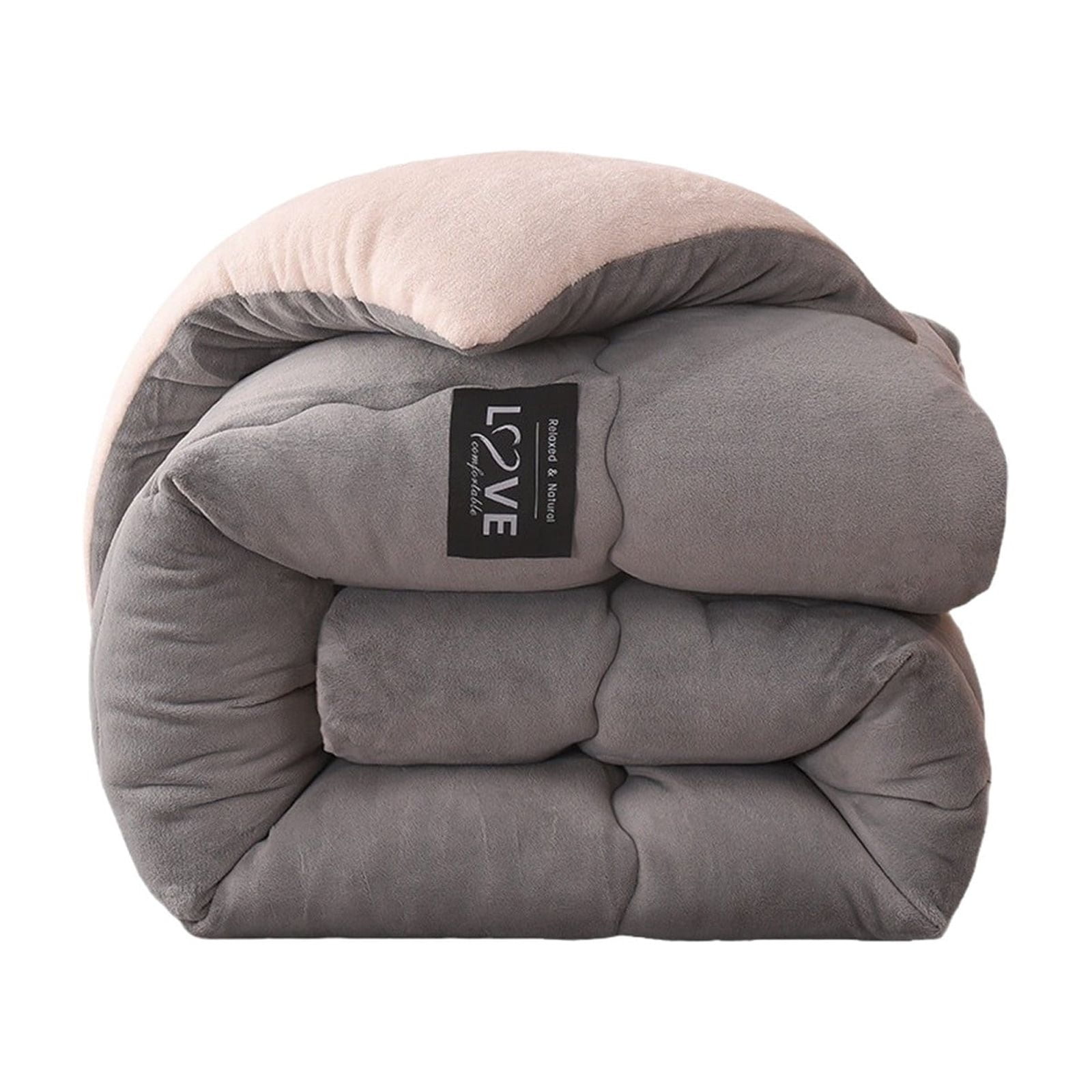 Bedding for cold months falls into a few broad groups, and this quilt belongs to the lightweight fleece-style group rather than the heavy down or wool group. Down comforters trap heat through loft and are usually filled with feathers or synthetic fiber, while the product data does not list a fill type, so fabric content is the main material fact to go on. The listing names milk velvet as the fabric content, a soft, plush-textured material that many shoppers compare to flannel or fleece. Product information lists the piece count as one, the season as winter, and the feature set as breathable, so the item is positioned as a bed covering rather than as a blanket for the sofa. The main product size is 200 by 150 centimeters, which the listing also gives as 78.7 by 59 inches. Those numbers are the first thing to measure against your mattress, because the product size describes the quilt itself and not the bed it will cover. A quilt of this size can be used alone over a sheet in mild weather or layered with a heavier blanket in colder rooms. The listing states a net weight of 1,700 grams, or 3.74 pounds, which places it on the lighter side of thick winter bedding. The title also says the quilt is lightweight, and the description calls it easy to fold and store, which suits a shopper who wants a warm layer without a heavy top piece. Compared with a traditional heavy quilt, its main appeal is that it stays manageable to handle, move between beds, and store. The listing also says the fabric is easy to clean and maintain, though it gives no specific care instructions, so the care label matters. In the category, it works as a practical middle option between a summer sheet set and a heavy comforter.
How It Differs From Comforters, Down Quilts, and Cotton
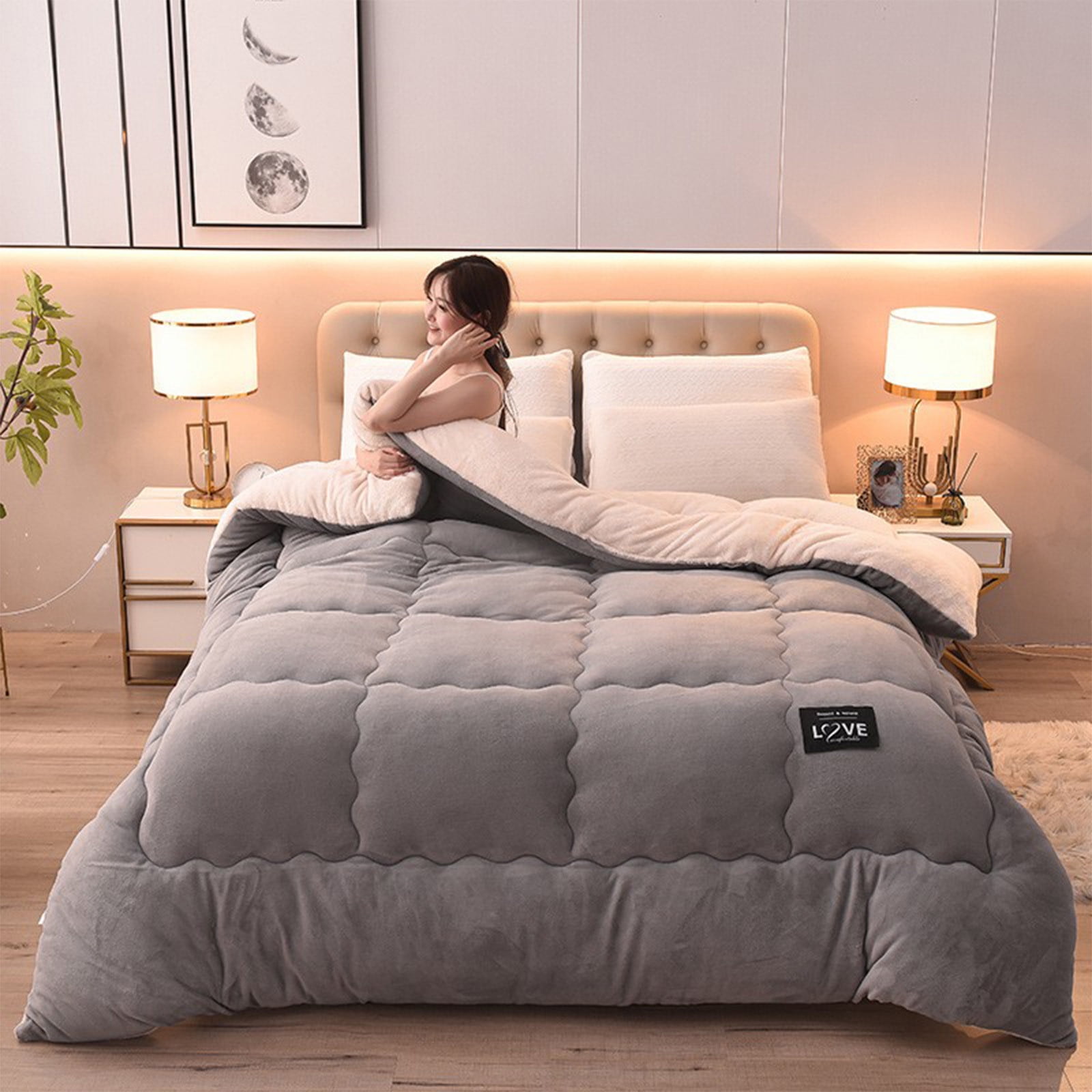
 The most useful comparison is between this fleece-style quilt and the other types of cover a buyer is likely to consider. A heavier comforter with a fiber or down fill usually adds more loft, and that loft is what makes it feel thick on the bed. The trade-off is weight, since a thick comforter can feel heavy for people who run warm or who sleep under several layers. A lighter fleece-style quilt reverses that balance, giving up some bulk in exchange for easier handling day to day. Down quilts sit in a different place, because they are typically valued for packing small and for the way the fill spreads across the body. A milk velvet surface is also not the same as cotton, so a buyer who prefers a crisp, woven feel will notice a softer and more plush hand. Cotton is often chosen for a crisper texture, and fleece-style fabrics generally trade that crispness for softness. Breathability is another point of comparison, and the listing describes this quilt as breathable, which means it is meant to let moisture escape rather than hold it close to the skin. The product data does not include test results for breathability, so the feature should be judged by touch and by how the quilt feels after a night of use. Compared with a heavier quilt, a lighter fleece-style piece may need an extra blanket or a bedspread layer in the coldest rooms. The listing labels the decor style as Art Deco, so the quilt presents as a more formal bed piece than a plain utility blanket. Buyers who want one light layer will find the trade-off easy to accept, while those who prefer a heavy, enveloping feel may be better served by a thicker comforter.
We may earn a commission from purchases made through this link. Price and availability are not tracked on this site.
What to Verify Before You Buy
 Start with the bed size, because the listed product size of 200 by 150 centimeters, or 78.7 by 59 inches, is the number to compare against your mattress. Measure the mattress width and length, then decide how far you want the quilt to drape over the sides and foot of the bed. A quilt that is too short leaves the feet uncovered, while an overly long one gathers at the foot of the bed. Next, check the weight, which the listing gives as a net weight of 1,700 grams, or 3.74 pounds, while a separate product-information field lists 5.38 pounds, so confirm the figure on the packaging before deciding. Check the fabric content, listed as milk velvet, and read the care label for washing instructions, because the product data does not include them. Look at the packing size, 40 by 10 by 10 centimeters or 15.74 by 3.93 by 3.93 inches, to judge how much closet or storage space the quilt needs when folded. Confirm the quantity, since the listing says one piece, and check whether you need a matching sheet or extra layer for the rest of the bed. Warranty information matters too, because the product data states that the quilt has no written warranty. The listing identifies the age group as adult, so the product is presented as adult bedding. Season is listed as winter, so buyers who want a lighter cover for spring or fall should compare it against a different weight class. A laundry plan also matters, because a bulky bedding piece is only useful if you can wash and dry it at home or find a convenient way to do so. Lay the quilt flat before you commit, and compare its color with your bedroom palette, since the title lists gray, blue, green, and pink options.
Choosing this quilt means accepting a lighter fleece-style layer in place of the loft of a heavy comforter. You also accept the listed trade-offs: a milk velvet surface and no written warranty, so measurements and a care plan matter most.