Collapsible Fabric Cube Bins for Kids' Rooms and Closets: A Category Comparison
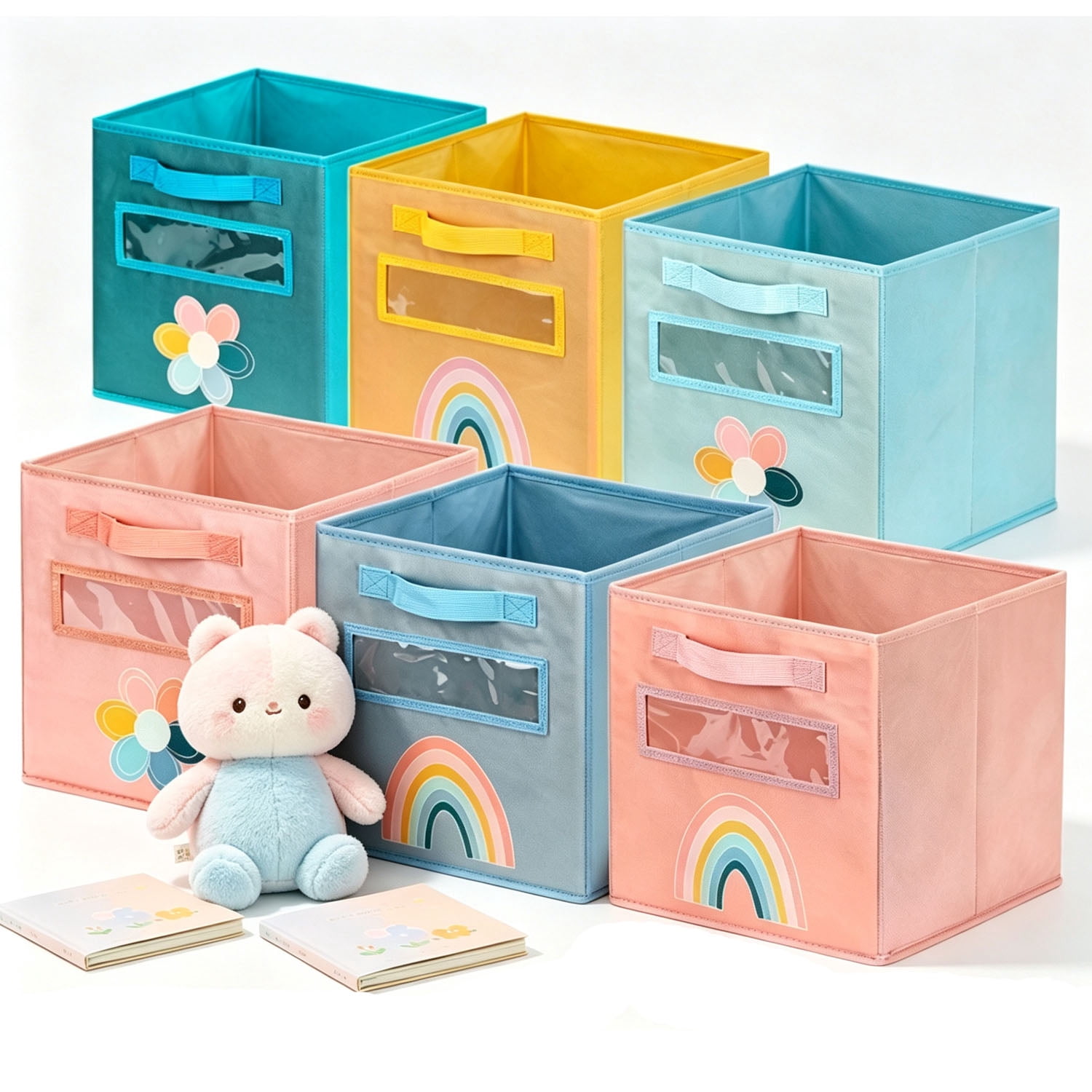
Toy clutter, closet odds and ends, and classroom supplies tend to pile up faster than most shelves can handle. Cube storage bins are one of the simplest ways to split that mess into labeled, reachable compartments without buying new furniture. The Godery 11-inch collapsible fabric cube bin set, sold as a 6-pack in a rainbow print, is one example of that category.
Contents
Where Fabric Cube Bins Sit Among Home Storage Options
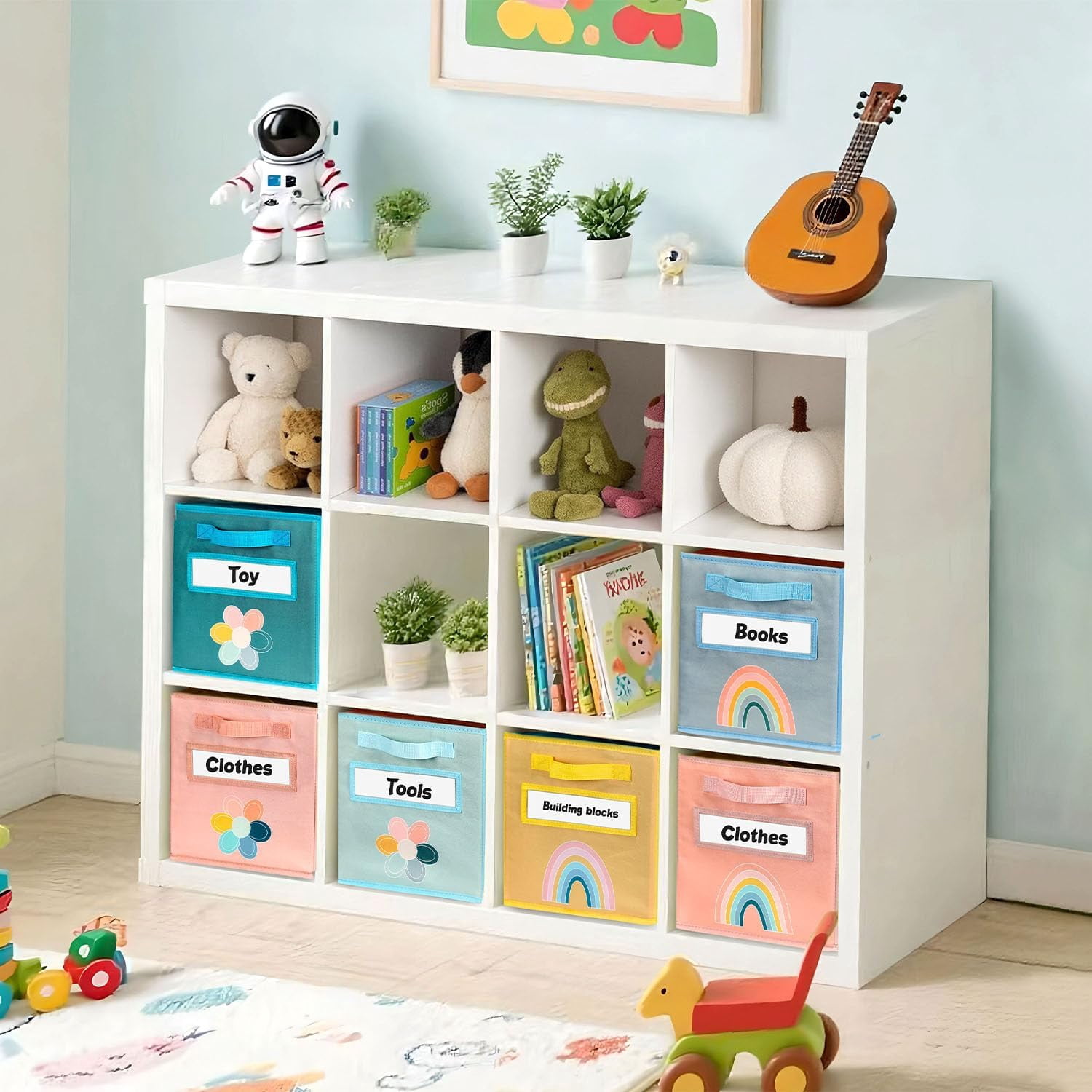 Fabric cube bins occupy a middle ground between rigid containers and open shelving, and that position shapes who they suit. Hard plastic bins hold their shape with thick walls and usually come with a lid, which makes them better for stacking heavy items or keeping dust out. Wire baskets and open cubbies show everything at a glance, but they leave loose toys and craft supplies exposed to sight and to the floor. Wooden cube organizers offer a finished look that suits a living room or home office, though they are heavier and tend to be fixed in place once assembled. This Godery set falls into the collapsible fabric group: each bin measures 11.2 inches long, 10.6 inches wide, and 10.6 inches high, giving a volume of 5.76 gallons. The set includes six identical bins, so a single shelf or closet can be organized with one matching pattern rather than mixed containers. The listed recommended rooms run from bedrooms and kids' rooms to closets, laundry rooms, pantries, dorm rooms, and offices, which reflects how broadly this shape is used. Recommended uses named in the product data include blanket, clothing, dinnerware, gift wrap, holiday lighting, keepsake, ornament, pet toy, and wreath storage. Because each bin weighs about 0.8 pound when assembled, they are easy to slide in and out of a cube unit by hand. The rainbow, flower, and wave prints are decorative, so the set reads as bright and playful in a child's room rather than as plain utility storage. For a shared family space, a fabric cube set works best where the goal is quick tidying and easy access, not long-term archival storage. Under-bed and pantry use is also listed, which makes these useful wherever a shallow, open-top container is needed. Compared with a full wooden cabinet, six bins take up very little floor space when they are stored flat.
What a Collapsible Fabric Design Gives Up
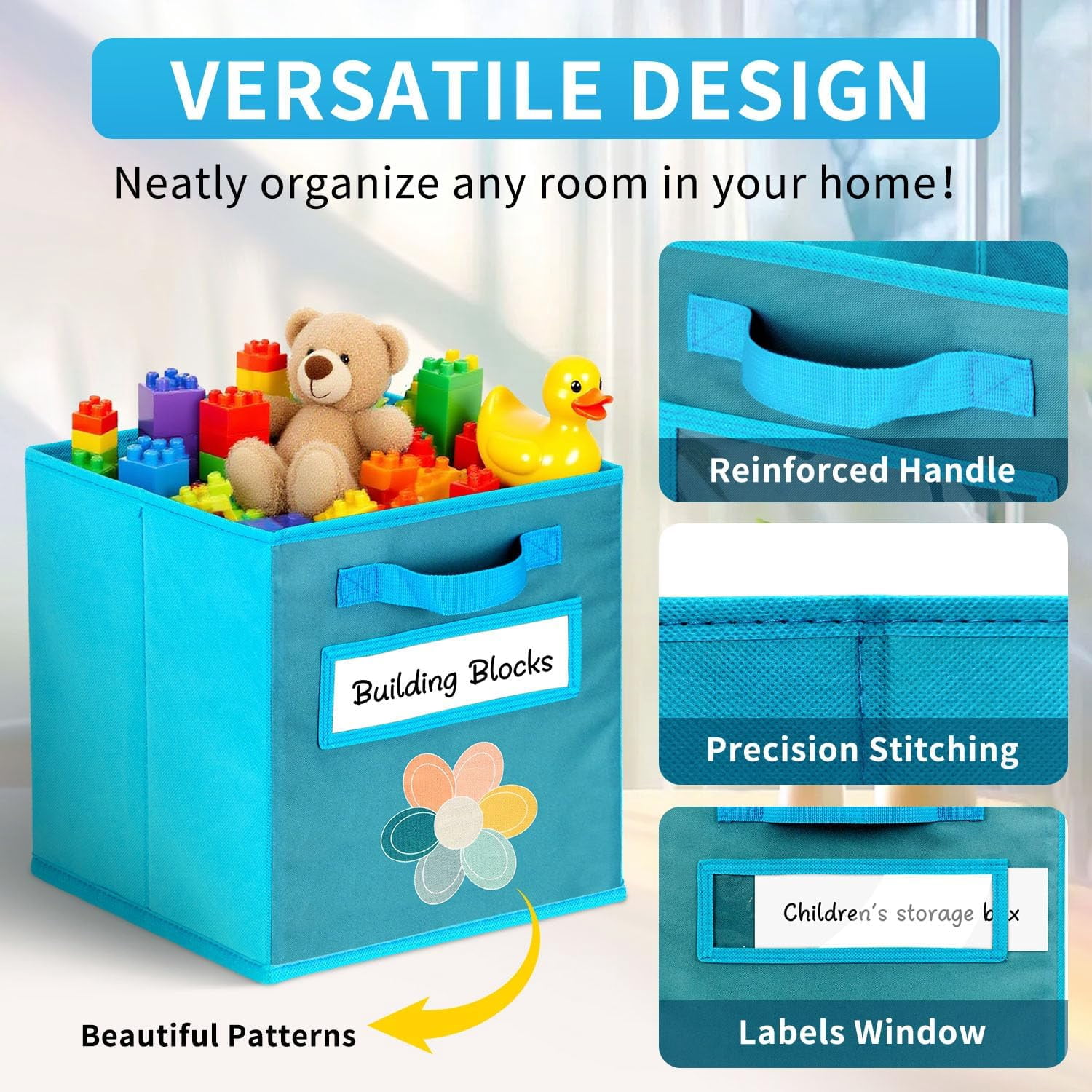 Choosing a collapsible fabric bin means accepting a few trade-offs that rigid containers avoid. The most important one is structure: the material is non-woven fabric with a built-in 2 mm cardboard reinforcement, and the listing says the cardboard base helps the bin hold its shape. Fabric still flexes under pressure, so heavy items such as hardcover books stacked high, or bulky tools, will bend the walls more than they would in plastic. The product data does not list a weight capacity, so these bins should be treated as light-duty containers for toys, stuffed animals, and lightweight supplies. The bins have no lid, so contents are exposed to dust and are not sealed against spills or pests. Carrying handles and a clear label window make the bins easy to pull out, but the window is only as useful as the label written on it. Collapsing the bins flat saves space between seasons, though each one must be reshaped with its cardboard base before use. A stackable design is listed, which helps when a cube unit has more rows than columns, but stacking open fabric bins with loose contents can shift them. Compared with plastic bins, the fabric version is lighter and more flexible when pulled from a shelf, but it is less rigid. The listed care method is wiping with a damp cloth or scrubbing with a brush, with no machine-wash instruction given. The age group is listed as adult, teen, and child, so the same bins can serve an office or a teen's closet as well as a playroom. For most kids' rooms, closets, and classroom cubbies, the flexibility is acceptable, provided the contents are light and the choice is made before buying.
We may earn a commission from purchases made through this link. Price and availability are not tracked on this site.
Before You Decide: Checks That Matter
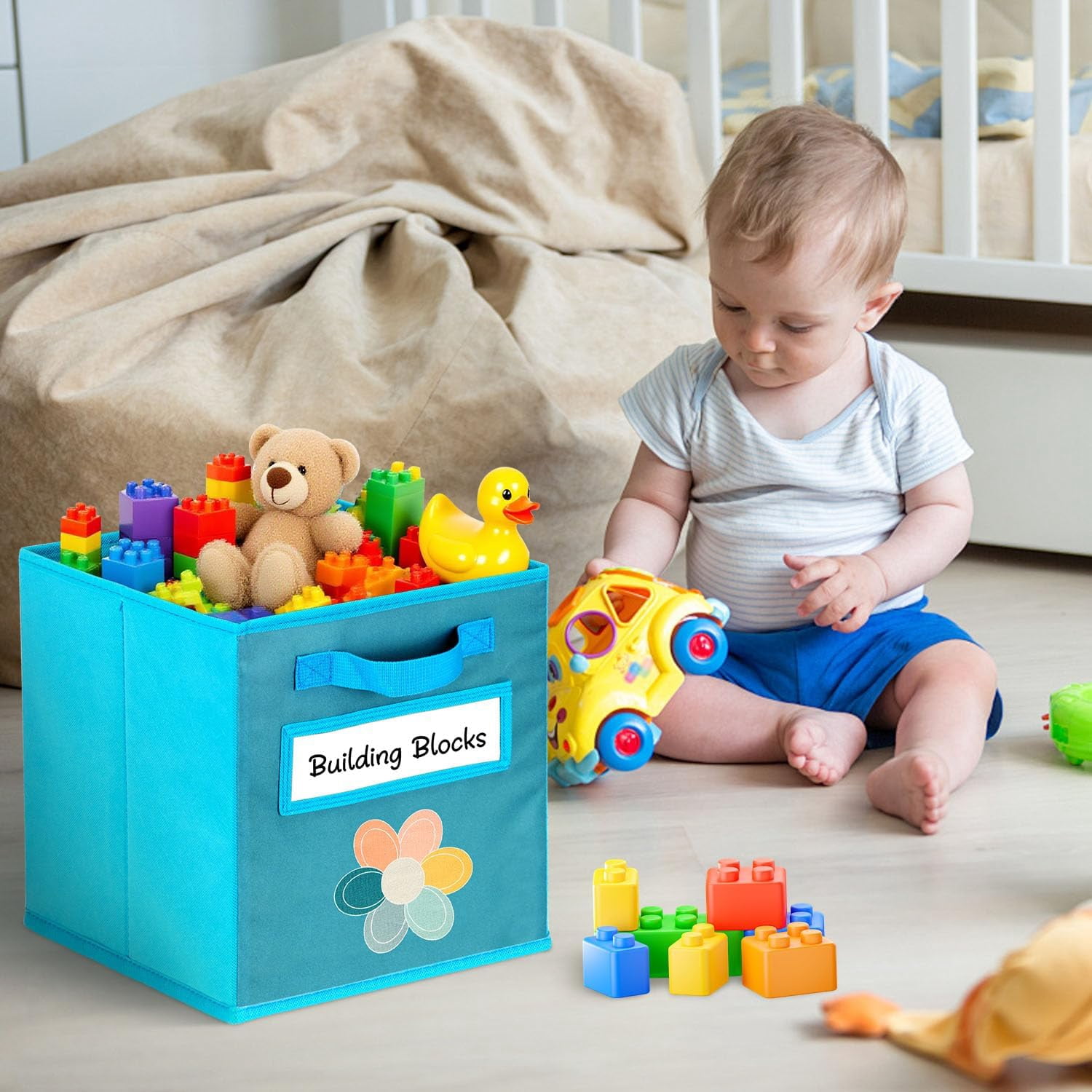 Start by measuring the opening of each cube, not just the width of the shelf, because the bins are listed at 11.2 inches long, 10.6 inches wide, and 10.6 inches high, and a cube's interior can be smaller than its outer frame. Subtract a small margin for the fold and reinsertion of the cardboard base, so each bin slides in and out without catching on the frame. Check the depth of the cube too, since the bins are 10.6 inches deep and a shallower cube will let them protrude. Next, estimate what each bin will hold: the 5.76-gallon volume suits soft toys, blankets, or light supplies better than dense items. Weigh the expected contents, since the bins themselves weigh about 0.8 pound and the product data gives no weight capacity to plan around, so a full load of six bins should be judged by how much each one will carry. Decide whether a lid is required, because this design has an open top and none is listed. Look at the color and pattern, a multicolor rainbow, flower, and wave print, and confirm it suits the room, noting that the listing also tags art deco, bohemian, and contemporary styles. Consider who will use the bins, since the age group is listed as adult, teen, and child, especially for a teen's closet or a classroom cubby where students share bins, and the label window only helps if someone writes on a card. Plan the care routine: the listing recommends wiping with a damp cloth or scrubbing with a brush, and a damp cloth is usually enough for everyday dust or small spills. Note that no written warranty is listed for this product, so plan without written warranty coverage. Finally, check whether assembly is needed: the data marks the bins as not requiring assembly, although the cardboard base must be inserted for setup. Those checks take a few minutes and prevent the most common mismatch, which is a bin that looks right on paper but does not fit the cube or the job.
Choosing collapsible fabric cube bins means accepting a lighter, more flexible container with no lid and no listed weight capacity. In exchange, you get bright patterns, carrying handles, and storage that folds flat between uses. For a playroom, closet, or classroom shelf where contents are light and quick access matters most, that trade-off is usually reasonable.