Choosing a 3.5 Cu.ft Top-Opening Chest Freezer for Your Home Space
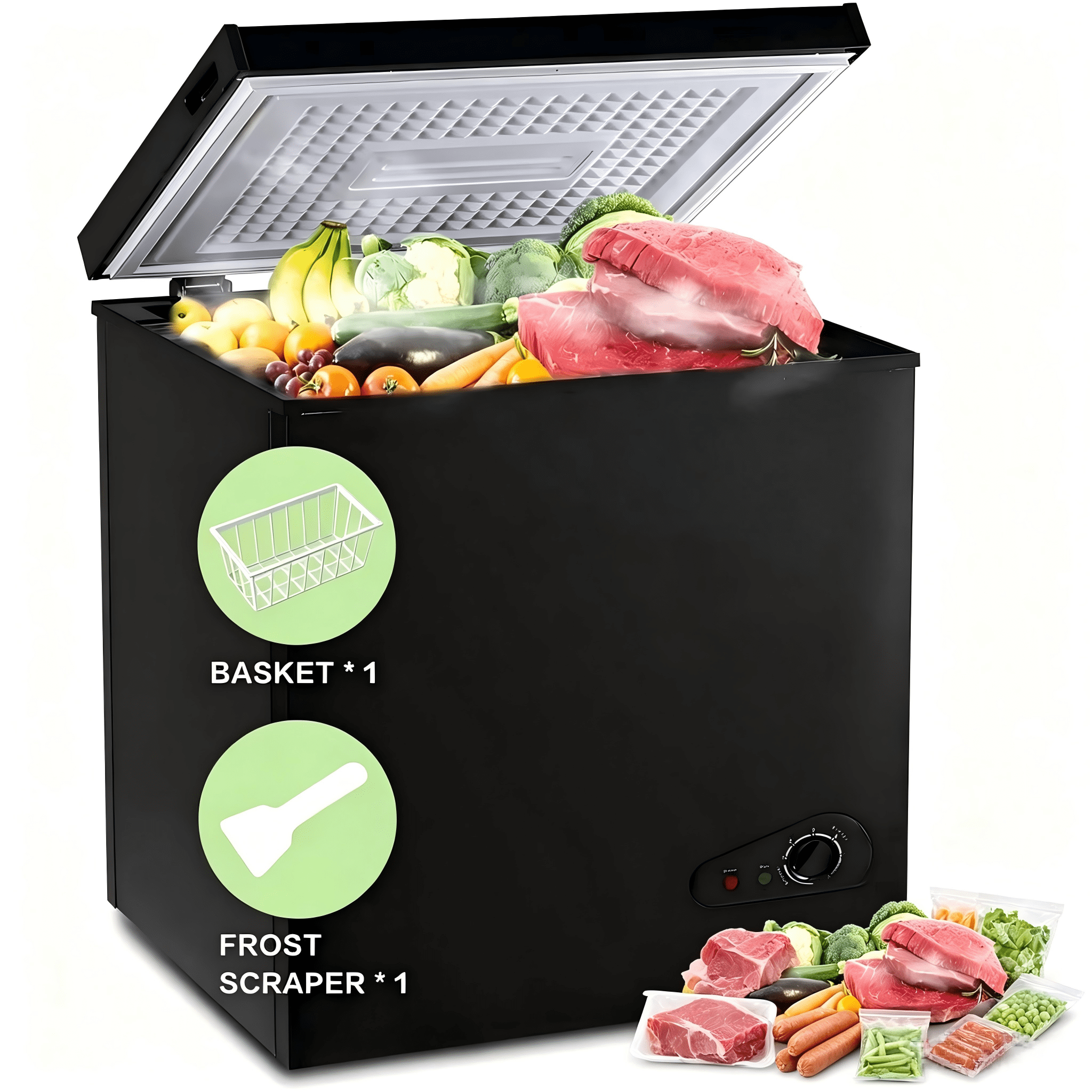
Anyone who has dug through a stack of frozen peas to find the bag of ground beef knows how quickly a freezer turns into guesswork. A chest freezer solves much of that problem by opening from the top, but the right size depends on the room it sits in and the food it has to hold. This GGTB model, listed at 3.5 cubic feet, suits a garage, basement, laundry room, or office corner where a full-size upright would not fit. Measuring the floor space and the lid clearance before buying matters as much as the capacity figure.
Fitting the Cabinet Into Your Room
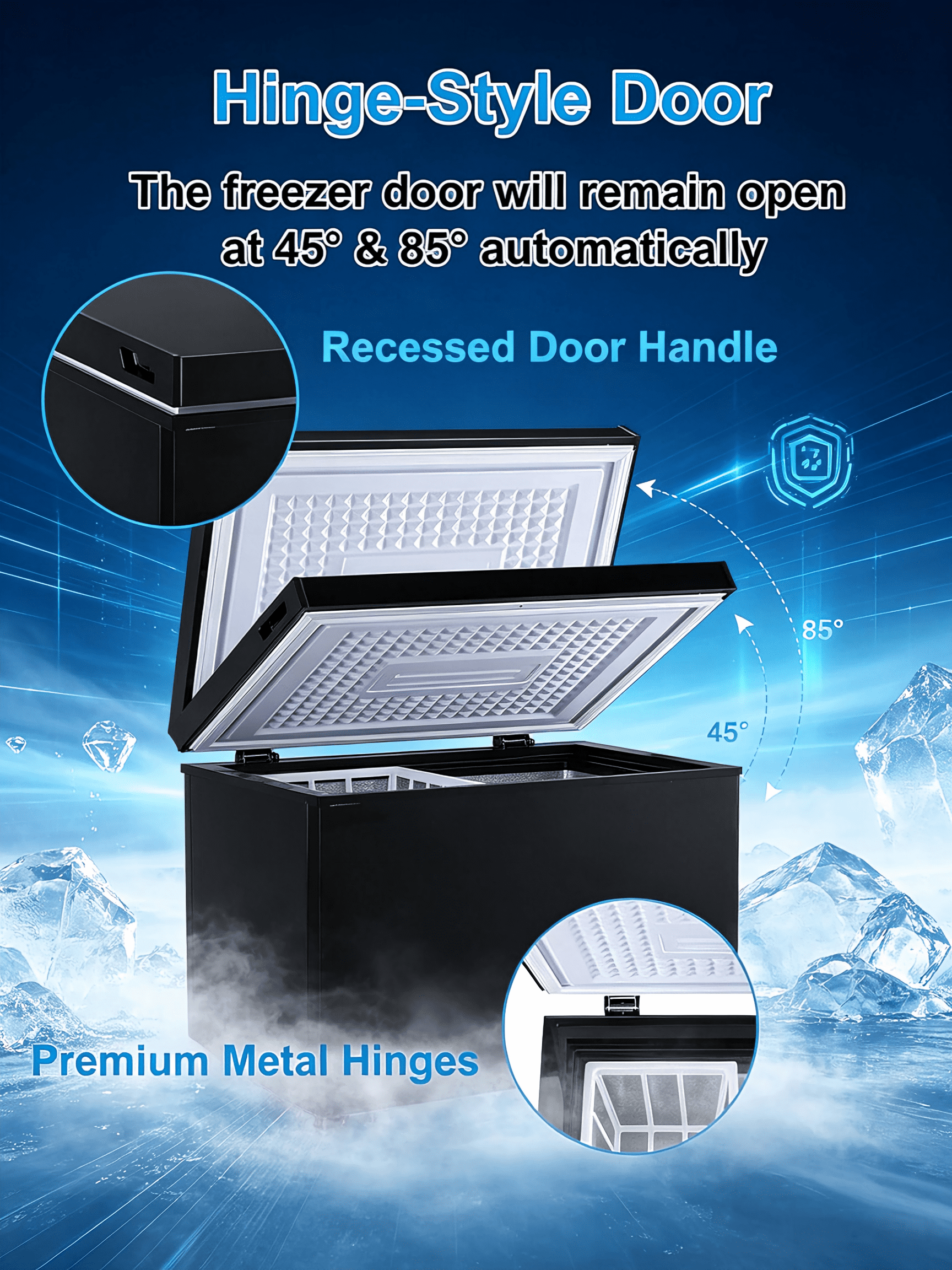 Start with the footprint, because it decides whether this cabinet fits the room before any other detail matters. The listing gives the exterior as 21.06 inches wide, 20.28 inches deep, and 29.13 inches high, so tape that rectangle onto the floor and look at it for a few minutes before you commit to the spot. Leave extra space behind the cabinet for the power cord and for air to move around the housing, since a unit pushed flush against a wall leaves no room to reach the back panel for cleaning or inspection. The lid is hinged at the top, so measure the height it needs when open, and note what sits above the cabinet, because a wall cabinet, a shelf, or a hanging pegboard can block the swing. The product data says the door opens to an angle of 45 to 90 degrees, which lets the unit sit closer to a wall than a traditional chest freezer that needs room to swing wide. Still, a few inches of clearance at the hinge side and the cord side keeps the lid moving freely and keeps the cord from being pinched. Surface is the second thing to check, and it matters more than many buyers expect. The product data describes adjustable leveling legs meant for uneven garage or basement floors, so use them to bring the cabinet level before it is loaded with food, since a cabinet that rocks puts uneven weight on the lid hinge. Set a small level on the lid, adjust each leg a little at a time, and check again until the cabinet sits flat and does not rock when you press a corner. Solid, level flooring such as concrete, tile, or sealed vinyl is a more stable base than carpet, which can compress unevenly under the feet and let the cabinet tilt over time. Daily handling centers on the removable wire basket, which is included with the unit along with an ice shovel. Lift it out to reach the bottom layer when you are searching for a specific package, and set it back in when you want the upper space for everyday items that you reach for most often. Remove it entirely when you need full height for large items such as whole turkeys or game meat, and keep the ice shovel stored where you can find it. The unit weighs 42 pounds before it is loaded, so plan the move with a second person and avoid tipping it onto its side; the product data recommends letting the freezer stand upright for 24 hours before first use. Write the footprint, the lid swing, and the weight on a note before you measure the room, so you can compare them against the actual clearances in the space without relying on memory.
We may earn a commission from purchases made through this link. Price and availability are not tracked on this site.
Temperature Settings and Planning a Load
 A chest freezer earns its floor space when a project, a season, or a bulk purchase creates more food than the kitchen can hold. The GGTB unit is listed with seven temperature settings, and the listing names five ranges: Strong Freeze from negative 4 degrees to 0.4 degrees Fahrenheit, Meat and Ice Cream Storage from negative 0.4 to 14 degrees, Drinks Zone from 14 to 26.6 degrees, Fruit and Vegetable from 26.6 to 32 degrees, and Refrigerate Mode from 32 to 50 degrees. Those ranges give you a practical way to plan a load, because a bulk purchase of meat belongs in the freezing range while a case of drinks can move to a warmer setting. The control is mounted on the front, so you can read and change the setting without lifting the lid, which matters when the cabinet sits in a garage or basement. When you do open the lid to load it, the basket can come out to make the bottom layer reachable, and the listing notes that it can be removed entirely when storing large bulk items. Mark each package with the date and contents using a marker that stays legible on cold packaging, and keep a simple inventory list taped to the lid so the record stays current. The included ice shovel is described as an accessory for ice, and the product data does not list other uses. Before the first load, the product data says to allow 24 hours upright before first use, so the cabinet should stand in its final spot for a full day before any food goes inside. For an off-season clean-out, the bottom drain plug is the feature the listing highlights for defrosting and cleaning, so check where the plug sits before you start. The listing gives a power figure of 0.53 kWh per day, which you can use with your local electricity rate to estimate running cost, though it is a rated figure and not a guarantee of a particular bill. In a garage, the main unknown is ambient temperature, and the product data does not state an operating range for the air around the cabinet. Check the manufacturer's instructions for the room conditions the unit is rated for before placing it in an unheated garage or outbuilding. Each of these details takes only a few minutes to confirm, and together they show whether the 3.5 cubic foot size, the 45 to 90 degree lid, and the removable basket suit the job you have in mind.
How often you open this cabinet depends on whether it serves as a daily backup or a seasonal stockpile, and that rhythm should guide where you place it. Matching the footprint, lid clearance, and room conditions to that routine is the simplest way to decide whether the 3.5 cubic foot size fits.