Overhead Garage Storage Systems: Comparing Manual Crank Lifting Racks
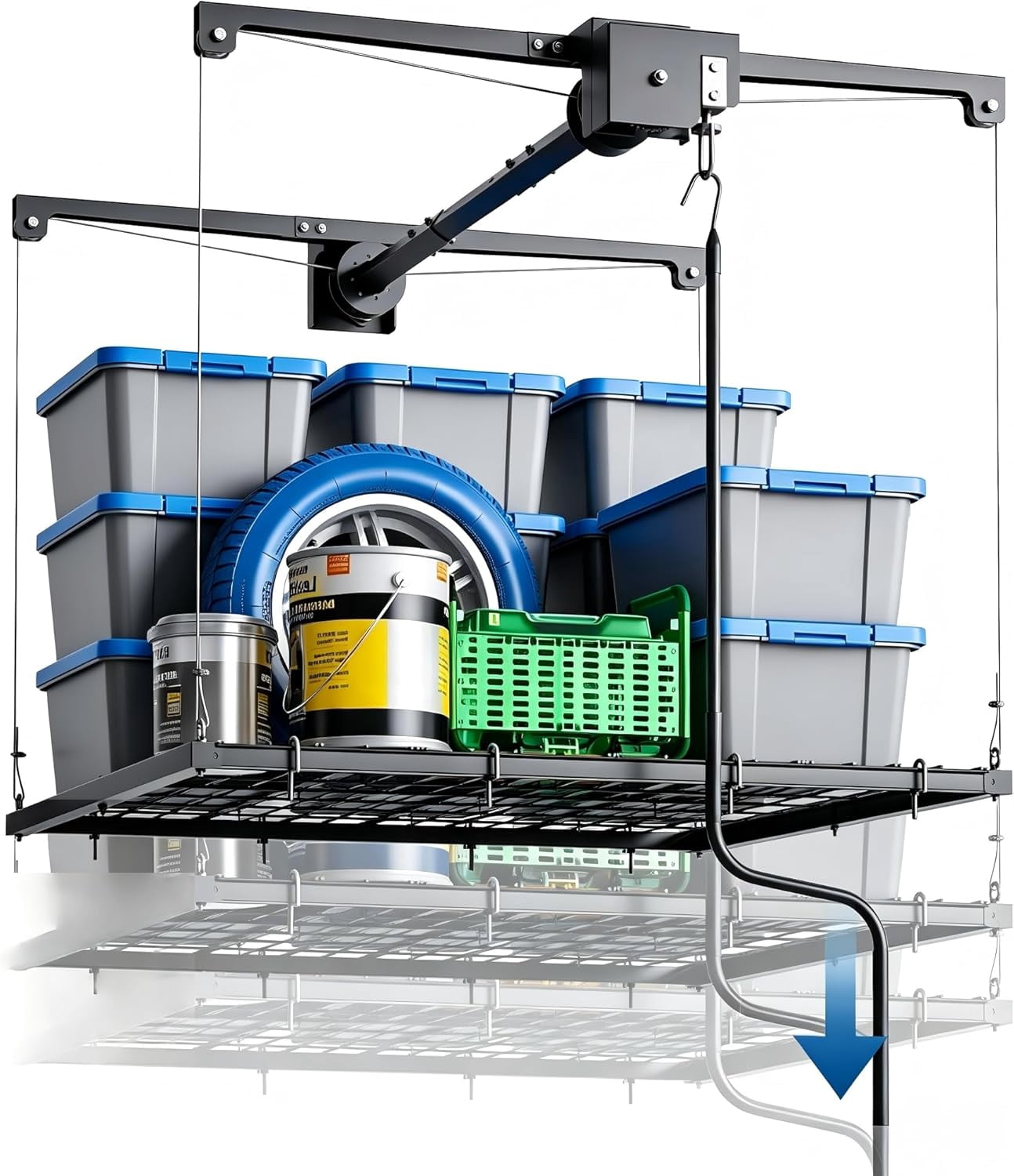
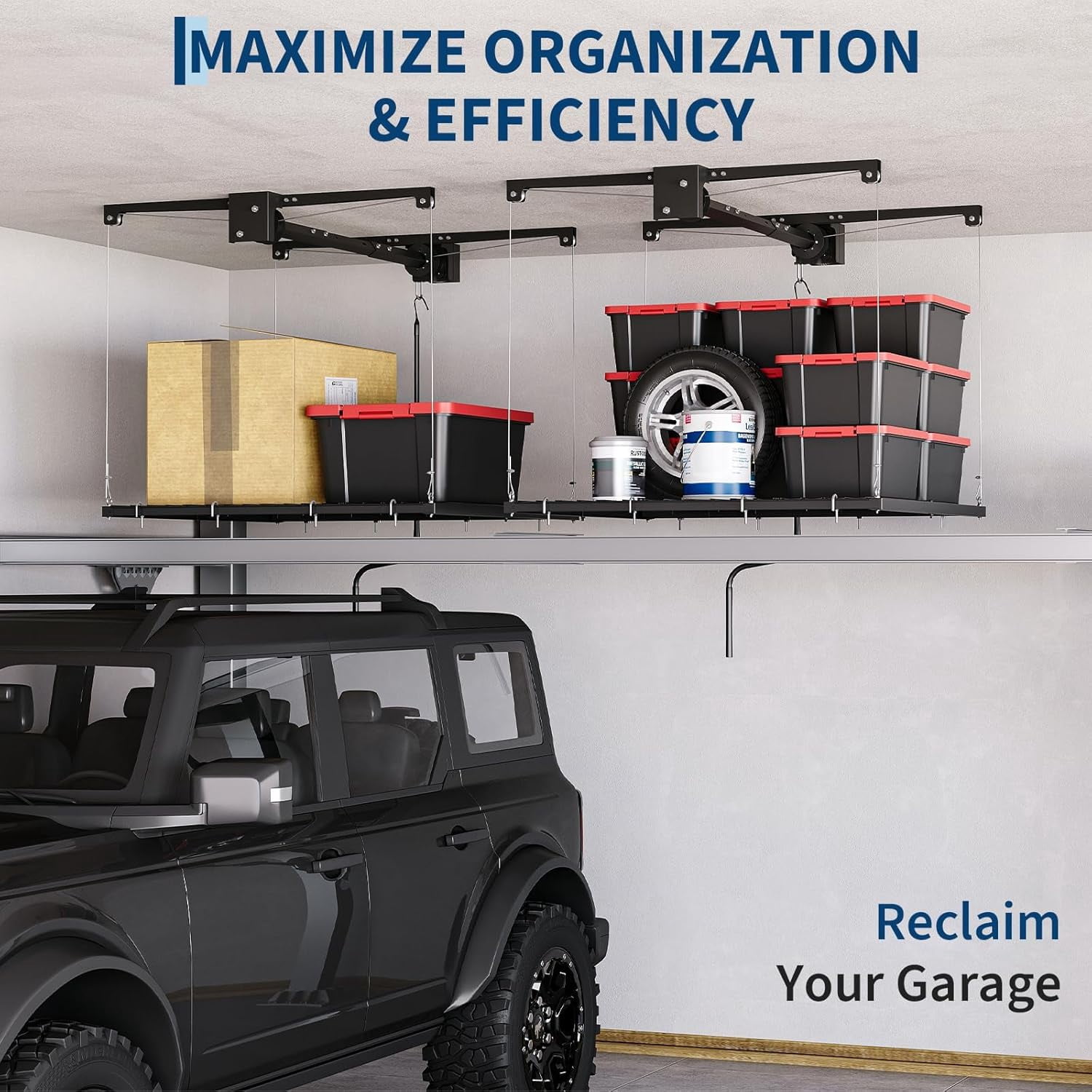
Reclaiming overhead space is one of the most practical strategies for organizing a garage or attic without sacrificing the floor space where you park, work, or move around. Among the various ceiling-mounted storage solutions available, manual crank systems provide a straightforward method for raising and lowering loads without requiring electrical installation or complex mechanical systems. This 4x4 foot storage rack, equipped with a 300 lb capacity and dual safety locks, represents a common choice for homeowners seeking to maximize unused overhead space while keeping stored items accessible from ground level.
Contents
Manual Crank Lifts in the Overhead Storage Category
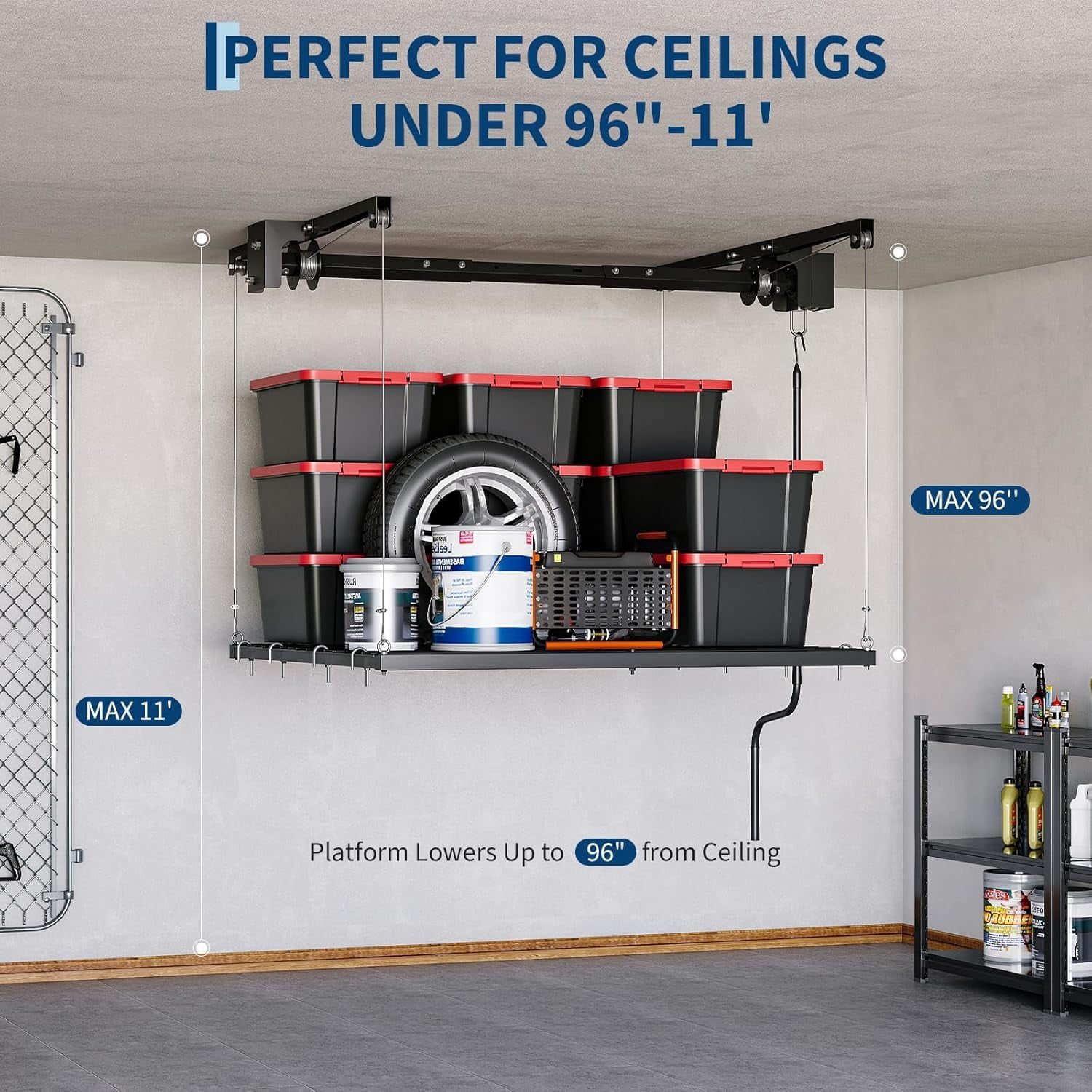 Overhead garage storage solutions fall into several distinct categories, each offering different advantages and trade-offs depending on your use patterns and installation preferences. Wall-mounted shelving keeps items at arm's reach and takes advantage of vertical wall space, but it consumes valuable area that might otherwise accommodate workbenches, pegboards, bikes, or other garage essentials. Motorized lift systems eliminate physical effort entirely and raise platforms with the press of a button, but they introduce electrical installation requirements and ongoing maintenance responsibilities that simple mechanical systems don't demand. Pulley-based racks distribute weight through rope, cables, and mechanical advantage, but they can become difficult to operate smoothly when loads approach their weight capacity. Manual crank hoist systems occupy the practical middle ground between these extremes—they require no electrical wiring, operate completely silently, and demand only manual effort when you're actually raising or lowering the platform. The key distinction is that once the platform reaches your desired height and the dual safety locks engage, you can step away from the crank without providing continuous support to the load. This 4x4 foot rack with a 300 lb capacity falls squarely into the residential storage range for seasonal decorations, tools, sports equipment, camping gear, and plastic storage totes. The powder-coated steel construction resists rust and corrosion, making it suitable for garages exposed to temperature fluctuations and humidity throughout the year. Unlike temporary folding solutions or portable racks, a permanently mounted lift system is durable infrastructure designed to last through many seasons without degradation. For homeowners who access overhead storage occasionally or seasonally rather than multiple times per week, a manual crank system provides the right balance of simplicity, reliability, and cost.
Capacity and Platform Size: What the Specifications Mean in Practice
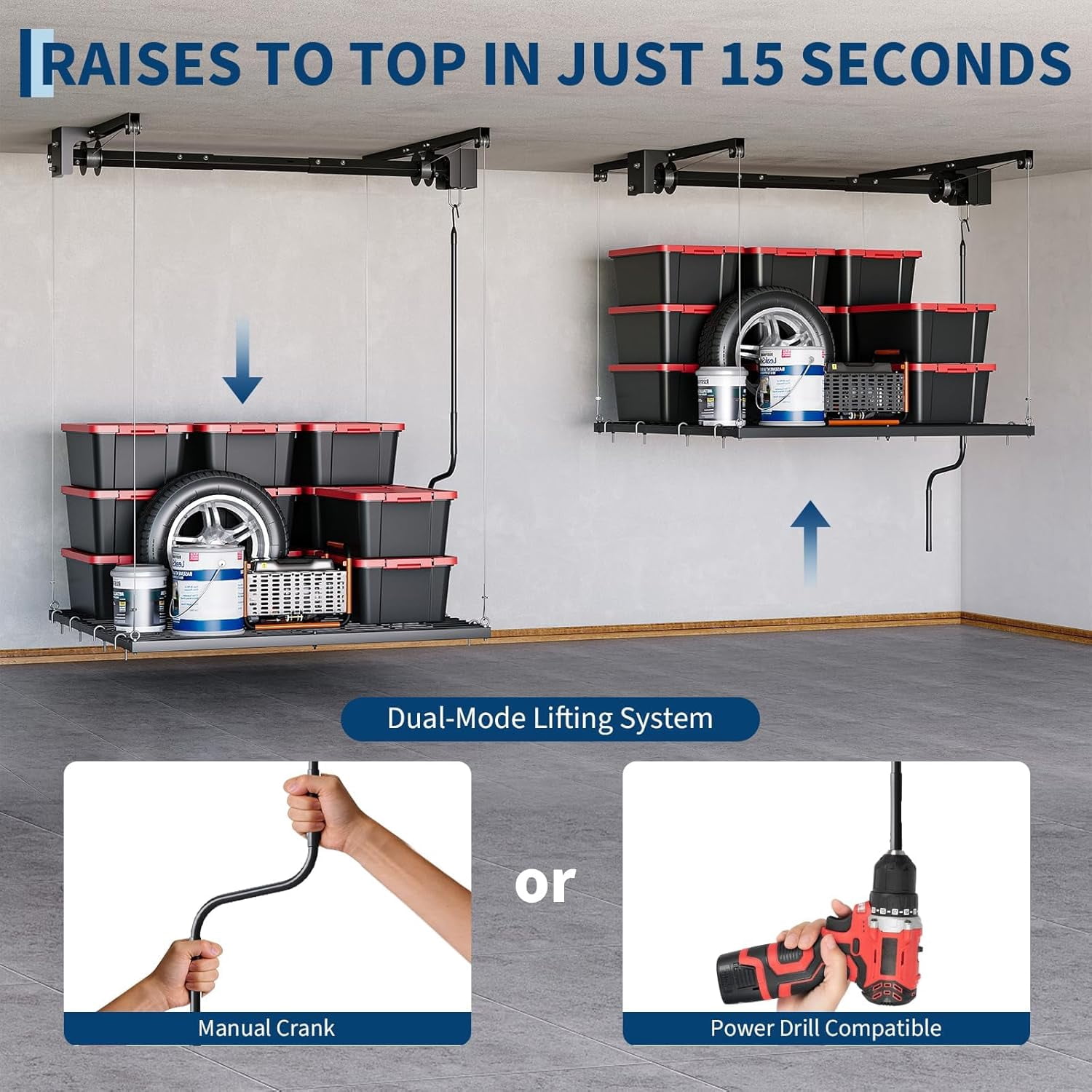
 The 4x4 foot platform provides 16 square feet of usable storage surface, roughly equivalent to half a sheet of plywood or the footprint of a standard wooden pallet. This specific dimension is not arbitrary; it reflects the practical maximum size that can span ceiling joists in a typical residential garage while remaining balanced and maneuverable during loading and unloading. The 300 lb weight capacity represents the maximum supported load when weight distributes evenly across the entire platform surface rather than concentrated in one corner, along one edge, or in a small area. A few heavy plastic storage bins or a motorcycle frame positioned across the platform operates well within this limit with a comfortable safety margin; dozens of lightweight cardboard boxes stacked haphazardly may easily exceed the capacity if you aren't careful about calculating total weight. The manual crank mechanism means you personally supply the rotational force to raise the platform, and the speed of operation depends partly on the weight of your load—heavier items require more turns of the crank handle to lift them to ceiling height, and sustained cranking demands increasing physical exertion. Once the platform reaches your desired position, the dual safety locks—consisting of a primary lock and an anti-fall latch—hold it firmly in place, allowing you to release the crank and walk away without supporting the load continuously. The 4x4 footprint also means this system occupies one section of your garage ceiling rather than spanning the entire width or length, making it best suited as dedicated storage for specific categories of items rather than serving as a catch-all solution. Practical uses include storing seasonal holiday decorations, camping equipment, holiday lights, bicycles, fishing gear, or sports equipment that you access a few times per year. The adjustable height allows you to position items at whatever elevation works best for your access patterns without requiring permanent installation of fixed shelves. The steel frame and crank mechanism benefit from occasional light maintenance—applying light machine oil to the chain links and pivot points keeps operation smooth and reduces wear over extended use.
We may earn a commission from purchases made through this link. Price and availability are not tracked on this site.
Ceiling Structure and Installation Considerations
 Before installing any ceiling-mounted storage system, carefully verify that your garage ceiling can support the weight without requiring additional structural reinforcement. The system relies on ceiling joists—the horizontal wooden structural members that span the width or length of your garage and carry the combined load of the roof, insulation, and any attic contents. Standard residential joists are typically spaced 16 or 24 inches apart and constructed from 2x6, 2x8, or 2x10 lumber depending on the garage's age and location. The included adjustable mounting brackets are designed to accommodate most common residential joist layouts, allowing them to be positioned to attach directly to existing framing without requiring additional structural work in typical situations. That said, inspecting your specific ceiling condition is a critical step you cannot skip: climb into the attic or use a sturdy ladder to examine the joist condition from below, looking carefully for any signs of water damage, rot, settling cracks, previous repairs, or pest damage that might affect structural integrity. A 300 lb load suspended from compromised joists creates a genuine safety hazard that cannot be overlooked, and failure could result in property damage or injury. The product specification term "evenly distributed" means the load should spread relatively uniformly across the platform surface, not concentrated in one area or corner where it would create damaging stress concentrations. The installation process typically requires basic hand tools such as a drill and wrench, and the job usually takes one to two hours of careful work to attach the mounting brackets securely to the joists using appropriate fasteners. Your specific garage ceiling height—usually eight feet in standard residential garages—determines the clearance available between the raised platform and your roof structure, which affects how high you can actually lift items while maintaining safe operational margins. Items you access seasonally work excellently with this type of storage; items you need to retrieve weekly or more frequently might become frustrating to access due to the manual operation effort required each time.
Choosing a manual crank hoist system means accepting the physical effort required to raise and lower your stored items in exchange for simplicity, reliability, and the freedom from electrical installation and maintenance. This trade-off works well for homeowners managing seasonal storage or less-frequently accessed gear, though those who move items frequently throughout the year may prefer a motorized alternative.