Choosing a 25-Foot Rubber Air Hose for Home Shop and Garage Use
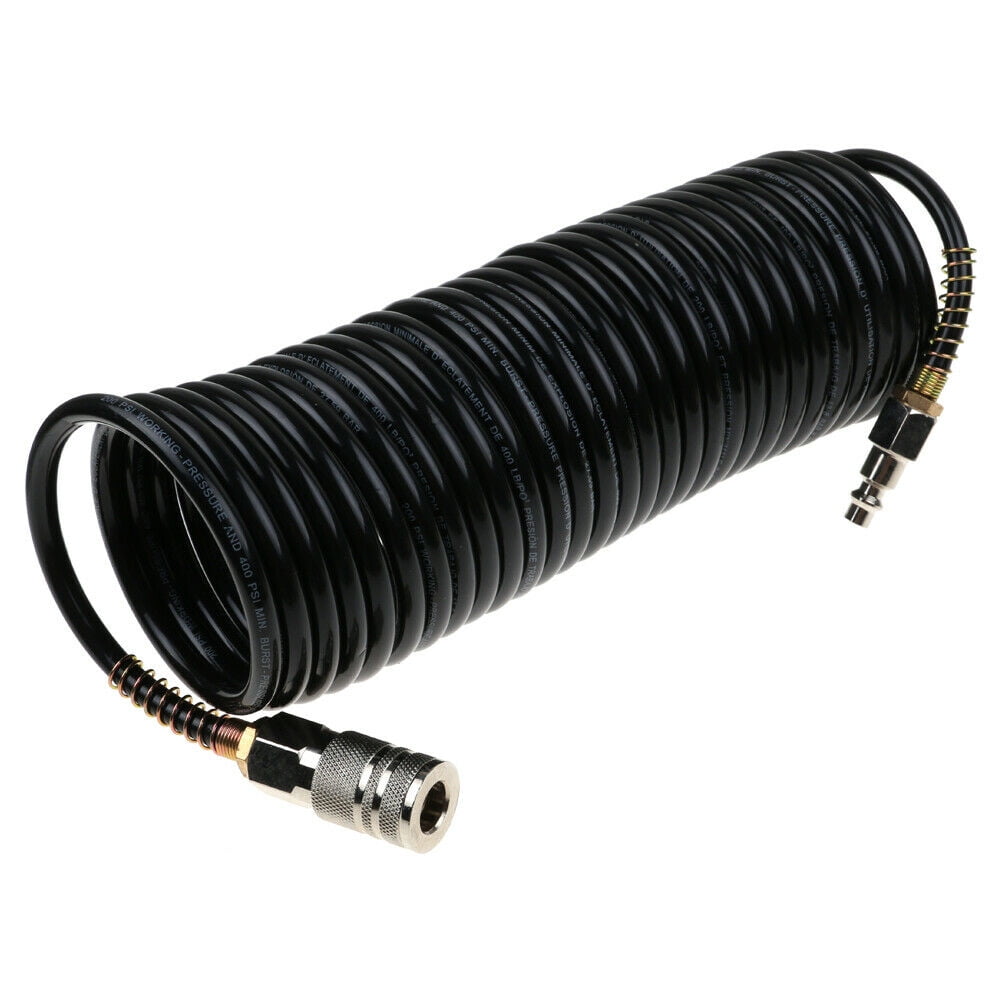
Anyone who has dragged a short air hose across a concrete floor knows how quickly the slack adds up. A hose that is too short forces the compressor closer to the work, and a hose that fights every corner makes a simple inflation job feel like a chore. This article looks at one 25-foot black air hose with 1/4-inch NPT fittings, using only the details in its product listing, so you can judge whether its length, fittings, and pressure rating suit your space.
Contents
Living With a 25-Foot Air Hose Indoors
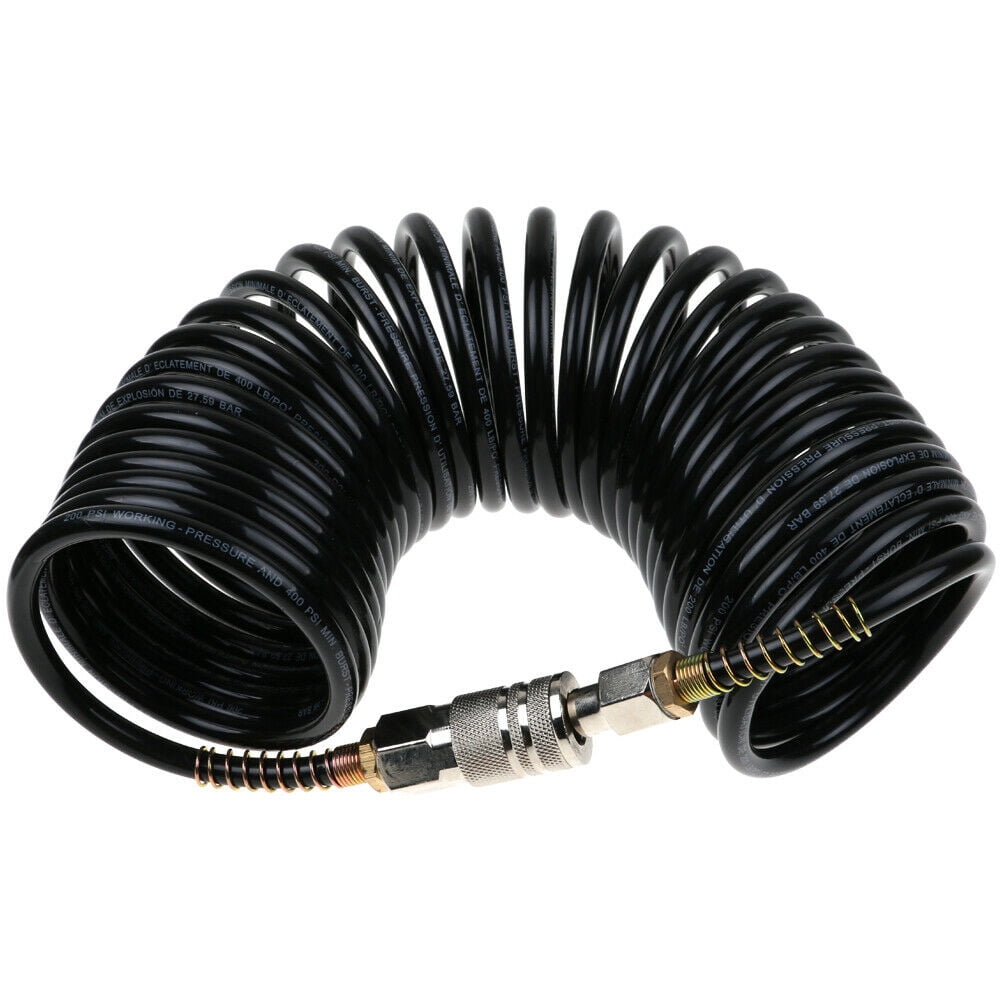 Indoors, the first question is where the hose will rest when it is not in use. The listing gives the length as 25 FT (7.5 meters), enough to reach from a compressor mounted near a garage wall to most of a standard one-car garage or a spare-room workshop. Before ordering, measure the straight distance from the compressor outlet to the farthest spot where you will use an air tool, then add extra length for corners and for loops that hang off a reel or hook. Concrete, tile, and sealed wood floors are common in these spaces, and the hose's flexible body lets it lie along a wall or a bench without bunching. The listing names the material as rubber in the title and as polyethylene in the material field, and both terms appear in the product information, so confirm the construction on the listing before you assume a specific material property. Daily handling is mostly coiling and uncoiling, so a wall-mounted hook or reel keeps loops off the floor where people walk. Loose hose on a shop floor is also easier to trip over, so the hanging position matters as much as the length. Measure the mounting spot first, because a hook or reel needs clear space for the coil to hang without touching a door, a shelf, or a vehicle mirror. The listing describes good flexibility and quick recovery after compression, which should make the hose easier to uncoil than a stiffer hose, though flexibility also depends on temperature. The listed working temperature range is -20°C to +100°C, which is about -4°F to 212°F, so an unheated garage in winter falls within it. Keep the hose away from direct heat sources, such as a space heater or a hot engine block, because the listing gives no rating beyond its stated range. The compressor end uses a 1/4-inch NPT fitting, so check that the thread on your compressor outlet matches before you attach anything. The included quick coupler and plug are what connect to the air tools, which makes switching between a nailer, an inflator, and a blow gun quick. Keep the coupler end off the floor when it is not in use, because grit in the fitting can interfere with how it seals. The listing gives a 200 PSI work pressure, so compare that figure with your compressor's maximum outlet pressure before you pair the two. The Proposition 65 notice in the listing says the product can expose you to diethylhexyl phthalate or lead, so wash your hands after handling and keep the hose away from anyone who might chew on it.
We may earn a commission from purchases made through this link. Price and availability are not tracked on this site.
Putting the Hose to Work in the Garage, Shop, or Yard
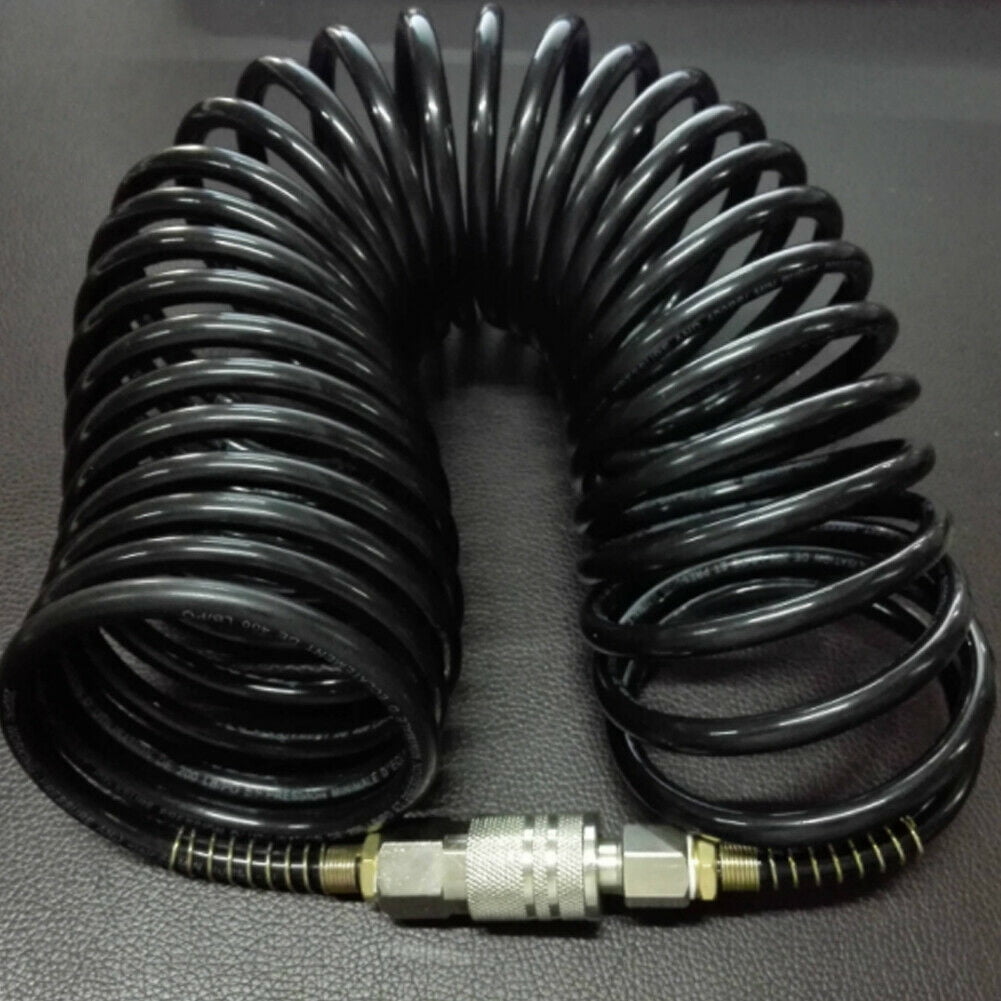 The listing names automotive as the recommended use, which points to the most common home job for this hose: a garage where a compressor feeds air tools and inflation tasks. Tire inflation, blowing dust off a workbench, and running a pneumatic tool on a project in the driveway are the kinds of tasks where a 25-foot run earns its length. Yard and driveway use differs from a shop bench, because the hose has to cross uneven ground, a threshold, or a gravel strip, and every snag adds strain at the fittings. Before you commit to this length, sketch the path the hose will take from the compressor door to the work area and mark any spot where it would cross a walkway or a vehicle path. The product description lists the inner diameter as 1/4 inch, which matches the fitting size, but one field in the product information lists 4 in, so confirm the diameter on the listing before ordering. A smaller bore generally delivers less air over the same length than a wider one, so a 1/4-inch hose is better matched to lighter tools and inflation than to high-demand tools. Compare the hose's stated 200 PSI rating with the tools you plan to run, and check each tool's own maximum operating pressure in its manual. Store the hose out of direct sun and off oily floors between seasons, because the listing describes oil and abrasion resistance but gives no storage rating. For seasonal projects, hang the hose in loose loops rather than tight wraps, so it does not take a set from being bent in one position for months. The listing says the hose resists weather, oil, coolant, and abrasion, which is useful on a garage floor where drips are common, but those are listed properties, not a promise against wear. Inspect the outer jacket and both fittings each time you hang the hose after a job, and look for cracks, cuts, bulges, or a fitting that has loosened. Replace the hose if you see damage rather than patching it with tape. The quick coupler and plug wear separately from the hose body, so check that the coupler still locks onto the tool and releases cleanly. Running a permanent air line through a wall or ceiling, or wiring a compressor into a fixed circuit, is work commonly handled by a licensed professional, and this portable hose is not a substitute for that job. The listing shows no written warranty, so keep your proof of purchase and inspect the hose as soon as it arrives.
Most home shops will reach for a hose like this during project weekends and seasonal tire checks rather than every day. Expect steady use while you are working on a project and occasional use the rest of the year, depending on how often your compressor runs.