Organizing Board Sports Equipment: A Freestanding Storage Rack for Skateboards, Snowboards, and Water Skis
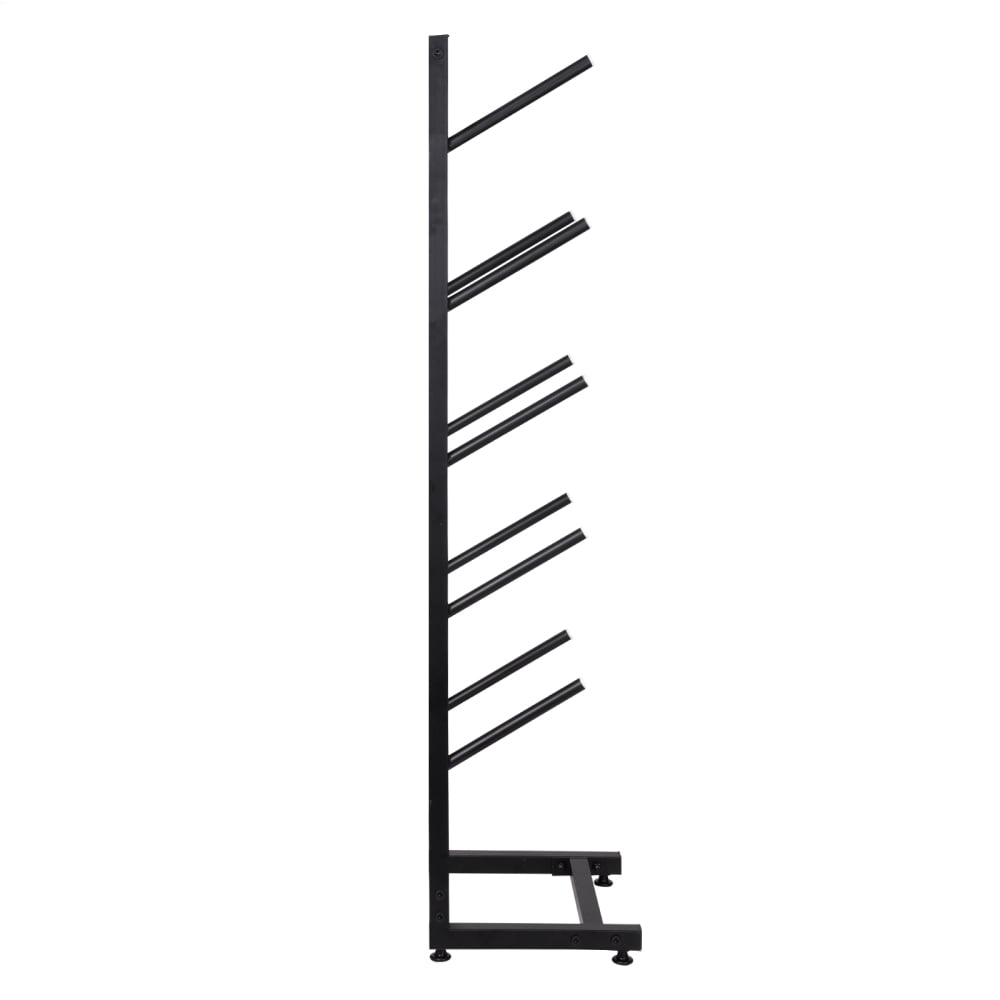
Garage storage for sports equipment like snowboards, skateboards, and water skis creates a persistent space challenge: these items are bulky, difficult to stack safely, and quickly consume floor space or closet room when simply laid flat or hung haphazardly. A dedicated freestanding board rack solves this problem by storing equipment vertically in an organized display that requires no wall space, no fasteners, and no permanent installation. This 5-tier single-sided metal rack is purpose-built for exactly this scenario, providing accessible, vertical storage for anyone with seasonal or year-round board sports equipment.
Contents
Freestanding Design and Where It Fits in Your Garage
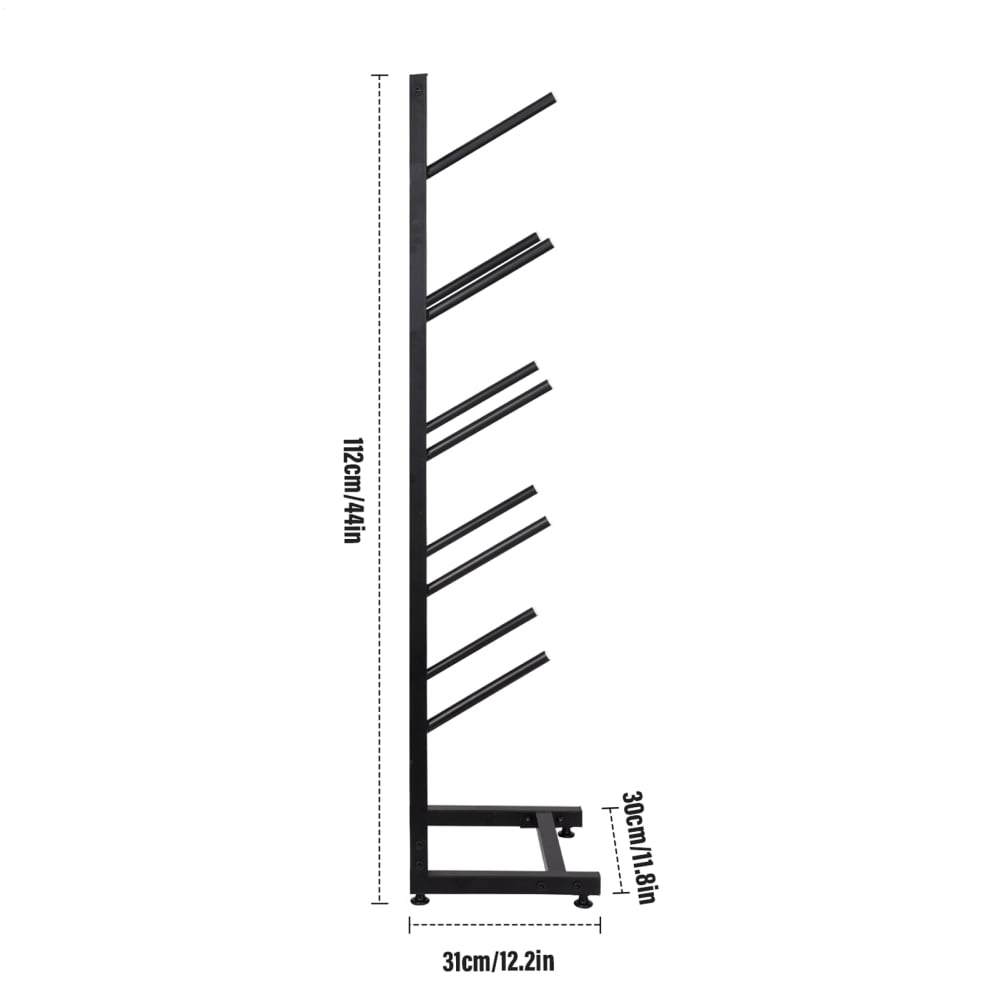 Within the landscape of garage storage for sports equipment, freestanding racks occupy a practical middle ground between the simplicity of floor storage and the permanence of wall-mounted systems. They are designed for equipment you access regularly or want to display rather than store away in closets and cabinets where items become forgotten and inaccessible. This 5-tier model measures 43.3 inches tall with a footprint of 11.8 inches wide and just 1.5 inches deep—a narrow profile that fits comfortably in a garage corner, against a workbench, or even along a bedroom wall without dominating the room visually. Unlike wall-mounted racks that require drilling into studs, inserting fasteners, and securing hardware to drywall or wood framing, this unit uses a four-leg tripod base that anchors securely to any flat floor without requiring structural modifications or damage to surrounding surfaces. The metal construction includes a waterproof coating designed to prevent rust and degradation in humid garage environments where moisture from cars, seasonal temperature swings, and outdoor activity create corrosive conditions that would otherwise compromise uncoated iron over time. At just over 8 pounds, the entire rack is light enough for a single person to move, relocate, or reposition if your storage arrangement or garage layout needs to change seasonally or over time. The adjustable-height feature on each tier lets you customize the spacing to accommodate boards of different thicknesses: snowboards, wakeboards, water skis, skateboards, and longboards can all be stored on the same frame without requiring additional brackets or adapters. Because setup requires no tools, fasteners, or assembly of any kind, the rack is ready to use immediately upon unboxing—simply position the base and adjust the tiers to your preferred heights and spacing. This ready-to-use approach is a significant advantage over wall-mounted systems that demand installation time, problem-solving, and often require additional tools or hardware sourcing. The five tiers positioned on a single face mean your equipment is completely visible and accessible at a glance, which encourages regular use and prevents boards from being forgotten in storage. The open metal frame design is lighter in weight and lower in cost than enclosed shelving units with backing, which makes it practical for garage use where functionality and efficiency matter more than decorative finishes. For anyone storing seasonal board sports equipment or building a collection of skis and skateboards, this design eliminates the need for permanent wall installation while keeping everything organized vertically and within reach.
Single-Sided Storage: Capacity and Space Trade-Offs
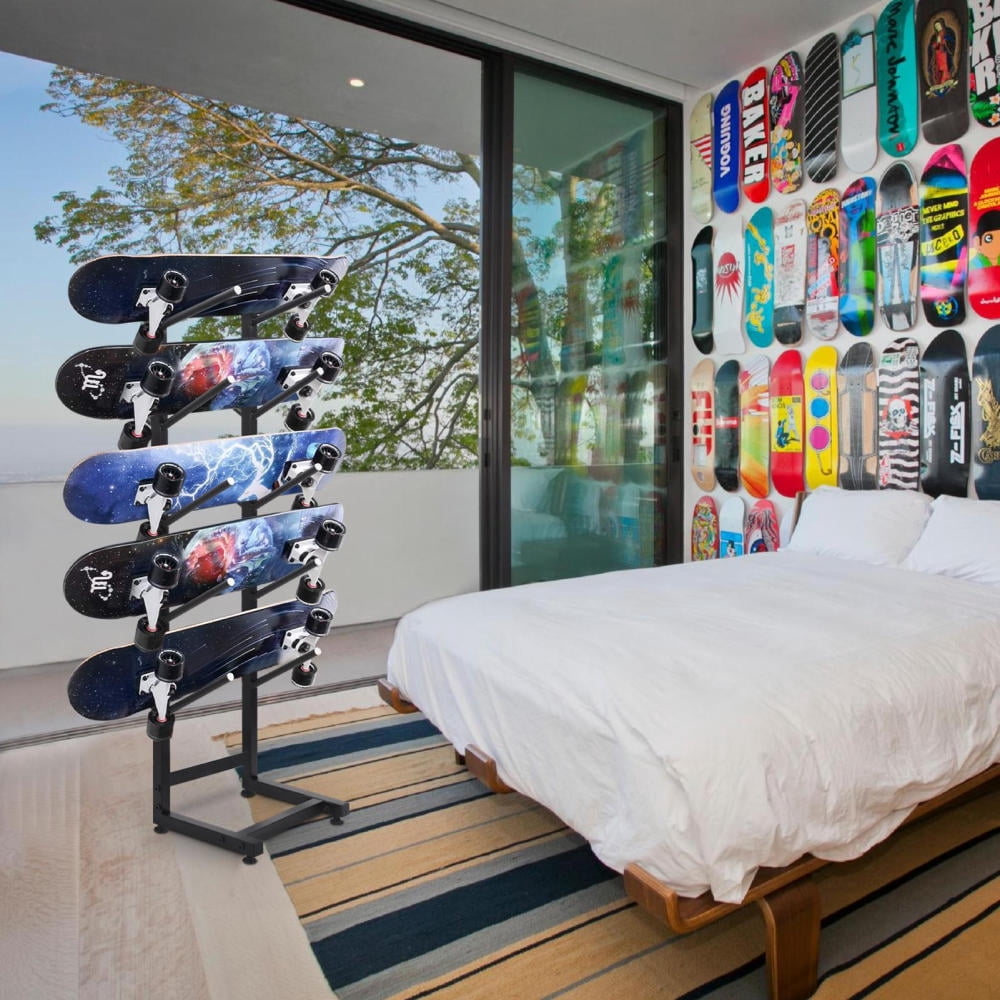
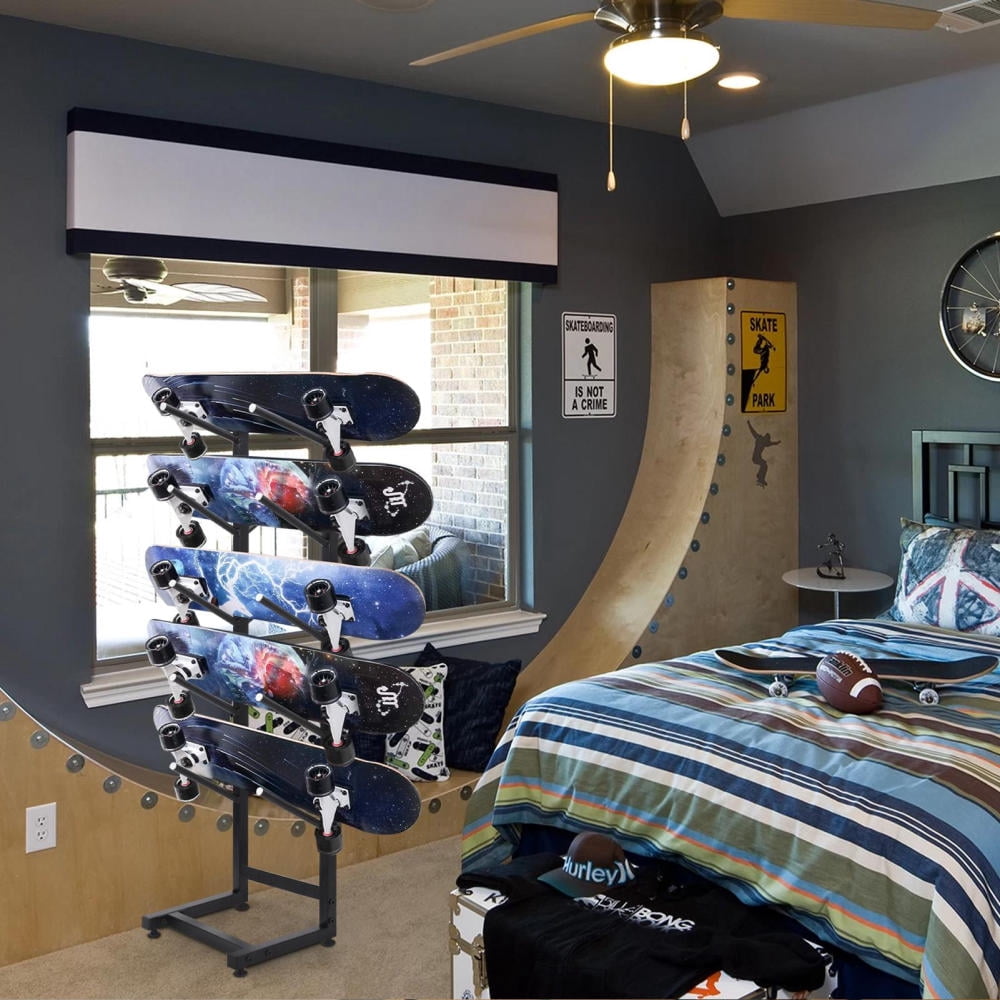 The fundamental design choice in this storage solution is whether to go single-sided or double-sided, and this decision creates genuine trade-offs worth understanding carefully before you commit floor space to the rack. A single-sided design has all boards arranged on one face only, which means the unit occupies floor space in one direction while remaining directly accessible from that single approach angle, making it easy to load and retrieve items. A double-sided rack would offer twice the storage capacity within the same footprint of floor space but would create a central barrier or island structure in your garage that you'd need to navigate around and maintain on both front and back sides. With five tiers positioned on one side, this unit can hold up to five boards at once—a capacity that's sufficient for a single serious enthusiast or for a household that shares one specific type of equipment, but potentially limiting if you own multiple board sports categories or a combined collection of skis, snowboards, wakeboards, and skateboards that totals more than five pieces. The single-sided design also means the back and sides of the frame remain open and unfinished, which saves weight and reduces manufacturing costs but also means the structural back presents a utilitarian, undecorated appearance if the rack is positioned away from a wall or background. Some owners deliberately choose to place the rack tight against a wall to conceal the back side and create a finished look, while others position it as an intentional display piece in more open space, deliberately accepting that visible storage inherently means seeing exposed structural elements and metal framing. The 1.5-inch depth is remarkably thin and slim compared to conventional wall-mounted shelving units that typically project 8 to 12 inches outward from the mounting surface, making this freestanding footprint much easier to fit into cramped garage corners or position without creating an obstacle that blocks or impedes traffic across your pathways. The metal frame is completely open and does not enclose or protect stored items from dust, which means boards remain exposed to air and dust particles but also means you can survey and see everything at a glance without opening doors, moving barriers, or shifting other items to view what's stored. The lack of any enclosure also means the unit costs significantly less to manufacture and purchase than enclosed shelving with solid backing panels, cabinet doors, or decorative finished surfaces, making it a practical and economical choice for garage use where durability and functionality take priority over aesthetics and appearance. The open frame design also naturally supports better air circulation around stored equipment, which becomes beneficial in damp or humid garages where moisture retention can cause rust or material degradation over seasons. If your available space is extremely tight or if you need to store more than five boards simultaneously, you would need to explore a double-sided rack, multiple separate smaller units positioned nearby, or supplementary wall-mounted storage solutions in your garage.
We may earn a commission from purchases made through this link. Price and availability are not tracked on this site.
Measuring Your Space and Verifying Equipment Fit
 Before making your purchase decision, measure the floor space where you intend to position the rack carefully and ensure you have at least 43.3 inches of clear vertical height from the floor all the way up to any overhead obstacles like ducts, pipes, structural beams, existing shelves, ceiling lights, or low ceiling sections that might block or interfere with reaching the uppermost tiers comfortably. The 11.8-inch width and 1.5-inch depth are equally critical dimensions to verify: confirm that your chosen location can safely accommodate a footprint that size without blocking doorways or entryways, interfering with garage door movement if you have an overhead door, or creating a tripping hazard in high-traffic areas of your garage or workspace. Each tier can be adjusted in height to some degree, but the vertical spacing between individual tiers is fundamentally determined by fixed rod positions and manufacturing mounting points, so you should examine product images carefully and measure your own equipment to confirm the tier spacing will accommodate your boards' thickness. Snowboards are typically 2.5 to 3 inches thick depending on model and construction method, skateboards measure about 0.5 to 1 inch thick, and water skis range from 2 to 2.5 inches thick, so if you own items with non-standard or unusual thicknesses, verify that some tier spacing combinations will work for your specific collection. There is no option to permanently remove tiers or drastically alter spacing between them since this design uses fixed mounting points and rod fasteners throughout, so you should be confident the spacing fits your equipment before purchasing. Consider also whether your equipment weight tends to be heavier on one side—for instance, if you primarily own snowboards, which are denser and heavier than skateboards, the weight distribution will concentrate higher on the frame compared to what a mixed and varied collection would create. The metal frame and four-legged tripod base are engineered to distribute weight evenly and maintain stability across the floor foundation, but you should still estimate your total equipment weight before finalizing your purchase decision. A typical snowboard weighs roughly 4 to 8 pounds depending on construction and materials used, a skateboard 3 to 5 pounds, and a wakeboard 5 to 8 pounds, so you can calculate whether five of your heaviest items would create a reasonable and balanced load. The waterproof coating protects the metal construction against moisture and rust, but if your storage space experiences severe standing water, salt air from coastal locations, or extreme humidity conditions over time, understand that even factory-coated metal will eventually show some wear and corrosion across seasons. Finally, think carefully about accessibility and ergonomics when you place the rack: can you comfortably reach the top and bottom tiers to load and retrieve equipment, or will some items sit out of natural reach or in an awkward position that makes removal difficult and discourages regular use?
This 5-tier freestanding rack makes a clear trade-off: you gain immediate setup without tools, portable flexibility to reposition the unit, and fully visible storage for up to five boards, while accepting a capacity ceiling that a larger wall-mounted or double-sided system could exceed. Whether that balance works for your situation depends on how much equipment you actually own, how often you access and rotate items, and whether your garage layout can accommodate a freestanding unit without creating obstacles or barriers. Measuring your space carefully and honestly assessing your equipment count before purchase will tell you whether this storage approach solves your problem or whether you need supplementary solutions.