Black MDF Floating Shelves: What the 3-Pack Is Made Of and How It Mounts
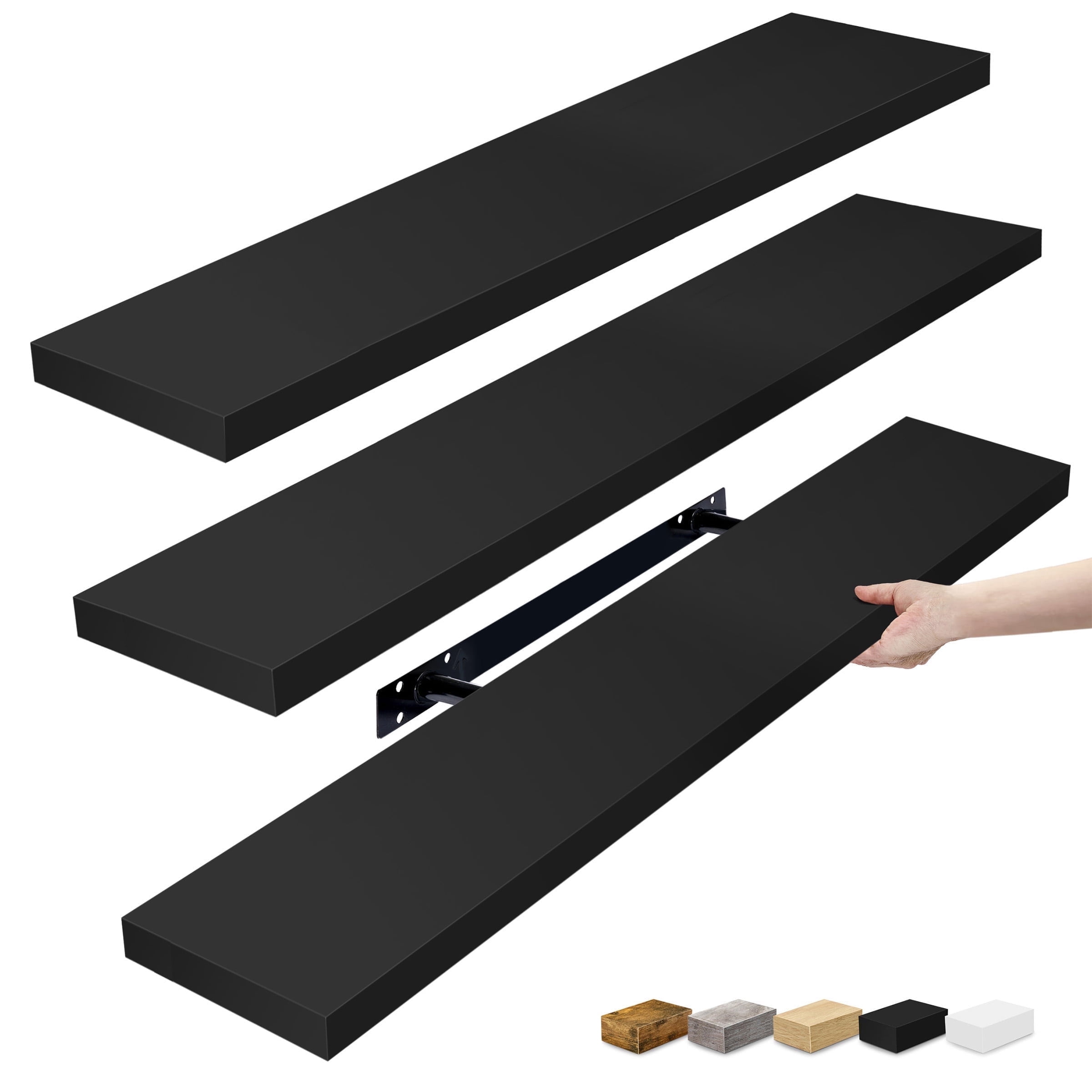
Engineered wood has become a common base for lightweight wall storage because it can be cut to uniform sizes and finished with a smooth surface. A set of floating shelves built from that material shows how much of the work happens before the boards ever reach the wall. This article looks at the materials, the way the pieces are assembled and mounted, and what daily living with them involves. Measure your wall first, because the length and depth you choose decide what fits above a desk, a sofa, or a bathroom vanity.
Contents
What the Shelves Are Made Of
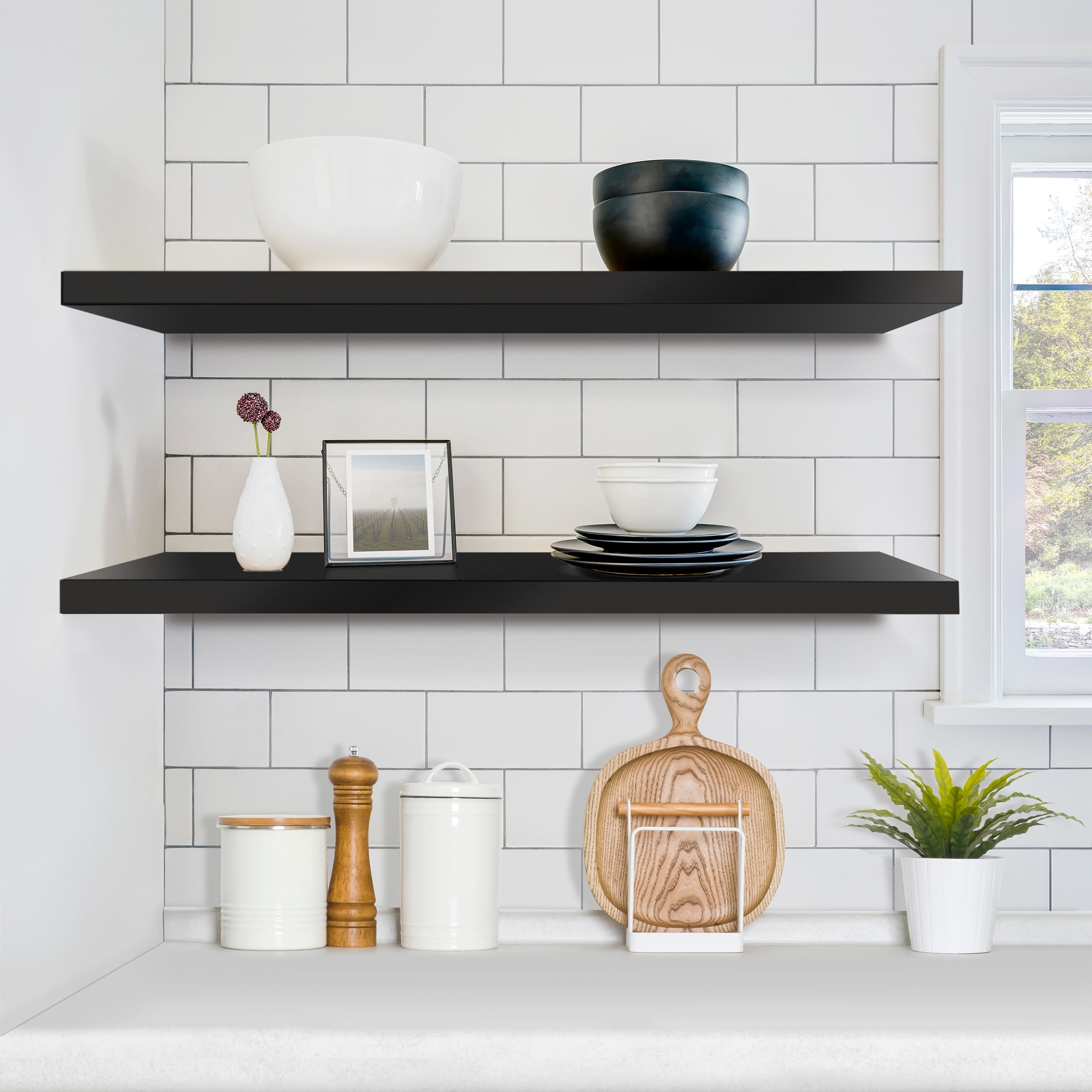 The shelves in this set are listed as MDF, which stands for medium-density fiberboard, an engineered wood panel made from wood fibers and resin rather than a single solid board. The product listing describes the material as engineered wood, not solid wood, and that distinction matters when you compare these shelves with heavier oak or pine boards. Each shelf measures approximately 35 inches long, 9 inches deep, and 1.5 inches thick, so the 35-inch length sets the visible footprint on the wall. The three-piece pack gives you three boards of identical size, which helps when you want a consistent line of shelves across a hallway or a row above a counter. The finish is a smooth matte surface in black, and the listing notes that the color may look slightly different in photos because of lighting and screen settings. A matte surface reads as flat, which suits a wall of framed photos, although any dark finish shows dust and pale scuffs more readily than a lighter one. The listed weight is 14.5 pounds for the set, a figure worth knowing when you plan the wall anchors and decide whether a second person should hold the shelves while the brackets go on. The package lists a piece count of 3 and a solid print pattern, with no grain or decorative veneer on the front face. Before you buy, measure the wall space and the objects you plan to display, because a 9-inch depth suits paperbacks, small frames, and succulents better than a bulky vase or a stack of large cookbooks.
Mounting the Shelves Without Guesswork
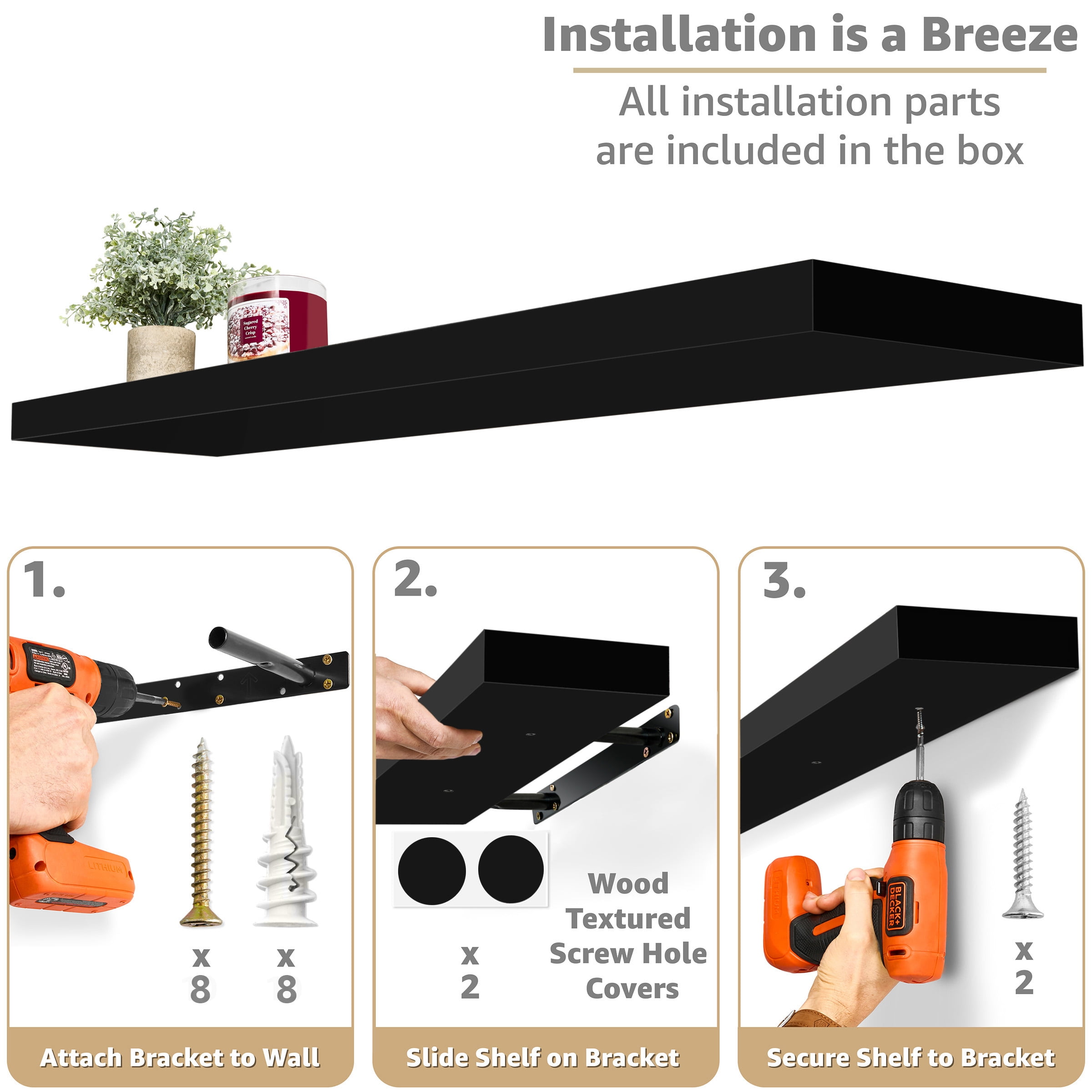 The set includes hardware, and the listing describes enhanced steel brackets that attach each shelf to the wall. Before you open the box, decide where the shelves will sit and mark that line with painter's tape so you can check the layout from across the room. Use a stud finder to locate wall studs along the planned line, because brackets fastened into framing behave differently than brackets fastened only into drywall. Where a stud lines up with a bracket position, the fasteners can reach solid wood framing. Where it does not, you will need wall anchors suited to the wall material and the expected load. The listing states that the shelves hold up to 22 lbs, and that figure is the number to plan around rather than an estimate of what the shelf can take. Typical tools for this job include a tape measure, a pencil, a level, a drill with a bit matched to the screw diameter, and a screwdriver. A level keeps the three shelves parallel, which matters more with a row of identical boards than with a single piece. Plaster, tile, and brick walls call for different fasteners than drywall, so check the wall material before relying on the included hardware. Work that involves drilling near electrical wiring or plumbing is commonly handled by a licensed professional, and that is a reasonable choice for any wall where you are unsure what sits behind the surface. The listing includes mounting instructions, and those instructions should be read in full before the first hole is drilled.
We may earn a commission from purchases made through this link. Price and availability are not tracked on this site.
Daily Care and the Parts That Wear
 Daily care for these shelves is simple because the surface is a matte engineered wood finish. A dry microfiber cloth handles dust well, and a barely damp cloth lifts fingerprints without leaving standing moisture on the board. MDF does not tolerate standing water well, so wipe spills promptly and keep the boards out of direct splash zones. Harsh solvents or abrasive pads can dull a matte finish, so test any cleaner on a hidden corner first. The parts that see the most handling are the front edges and the top lip, where hands lift objects on and off. Over time, the screws and brackets deserve a periodic check, especially in a room where the shelves carry heavier items or where the wall gets bumped. Look for a shelf that tilts, a screw that backs out, or a visible gap between the bracket and the wall, and address it before adding more weight. Because the color is black, scratches and scuffs show more than they would on a lighter shelf, so keep a small touch-up supply that matches the finish. In a bathroom, keep the shelves clear of the shower spray and away from direct steam, since engineered wood needs moisture control. Rotating or repositioning decor now and then also prevents dust from building up in one spot along the edge.
A three-pack of black MDF floating shelves suits a bedroom wall, a living room gallery row, or a bathroom wall above a vanity, as long as the wall is measured and the studs are located first. Choose the length and depth based on the objects you plan to display, and keep the listed 22 lb capacity in mind when deciding what goes on each board. Careful measuring and a level line turn the set into a tidy, functional display that fits the room.