4x4 Foot Overhead Garage Storage Lift: Manual Crank System for Reclaiming Ceiling Space
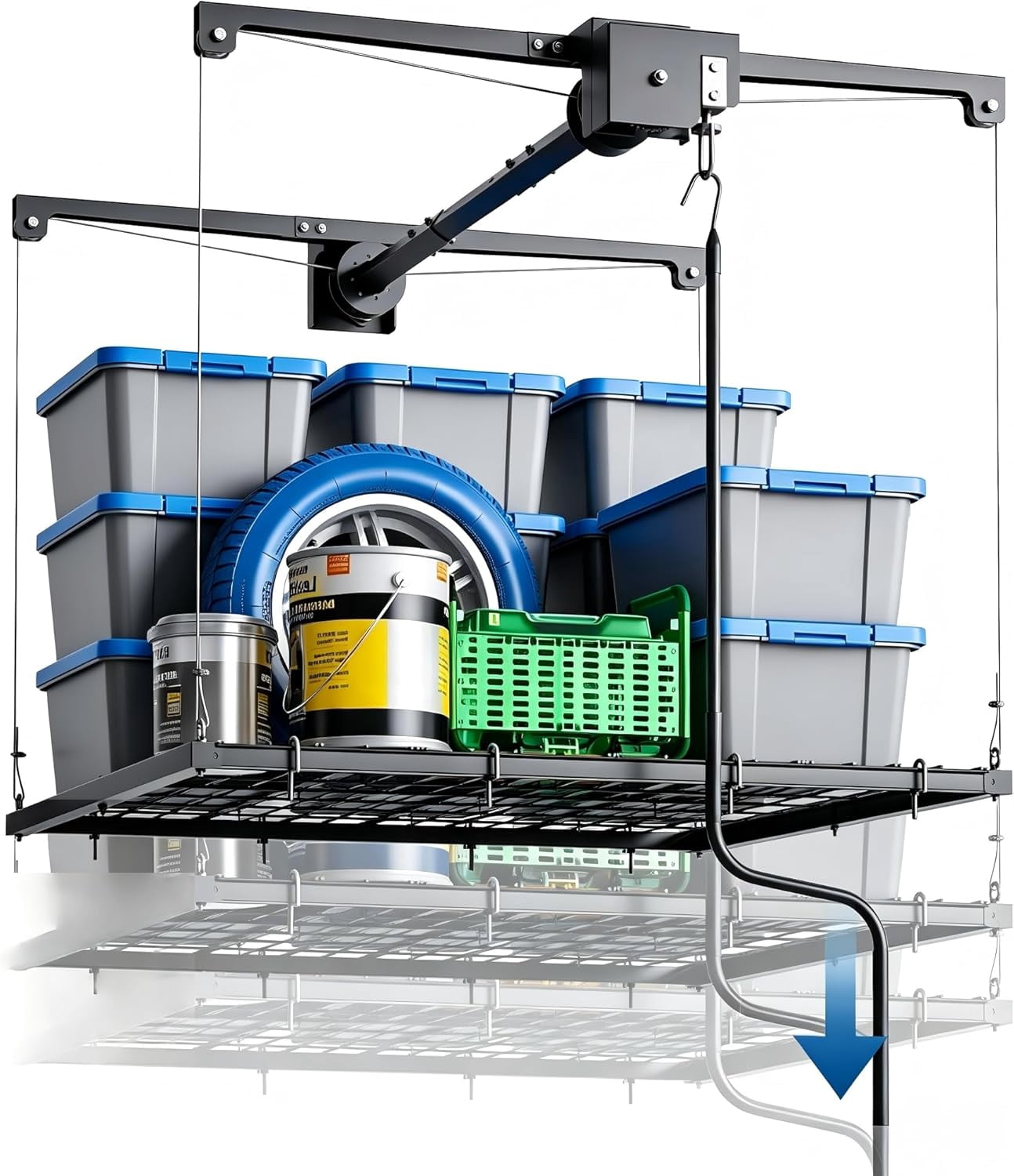
Garages and attics accumulate seasonal gear, tools, and equipment faster than most homeowners expect. Overhead ceiling space—often unoccupied and wasted—represents a significant storage opportunity, but retrieving items from 8 or 10 feet high typically requires a ladder and sustained physical effort every time. A manual crank-operated ceiling-mounted storage lift uses pulley mechanics to raise and lower a platform from ground level, converting dead airspace into accessible storage without major structural work or renovation.
Contents
Overhead Storage Lifts in the Garage Organization Category
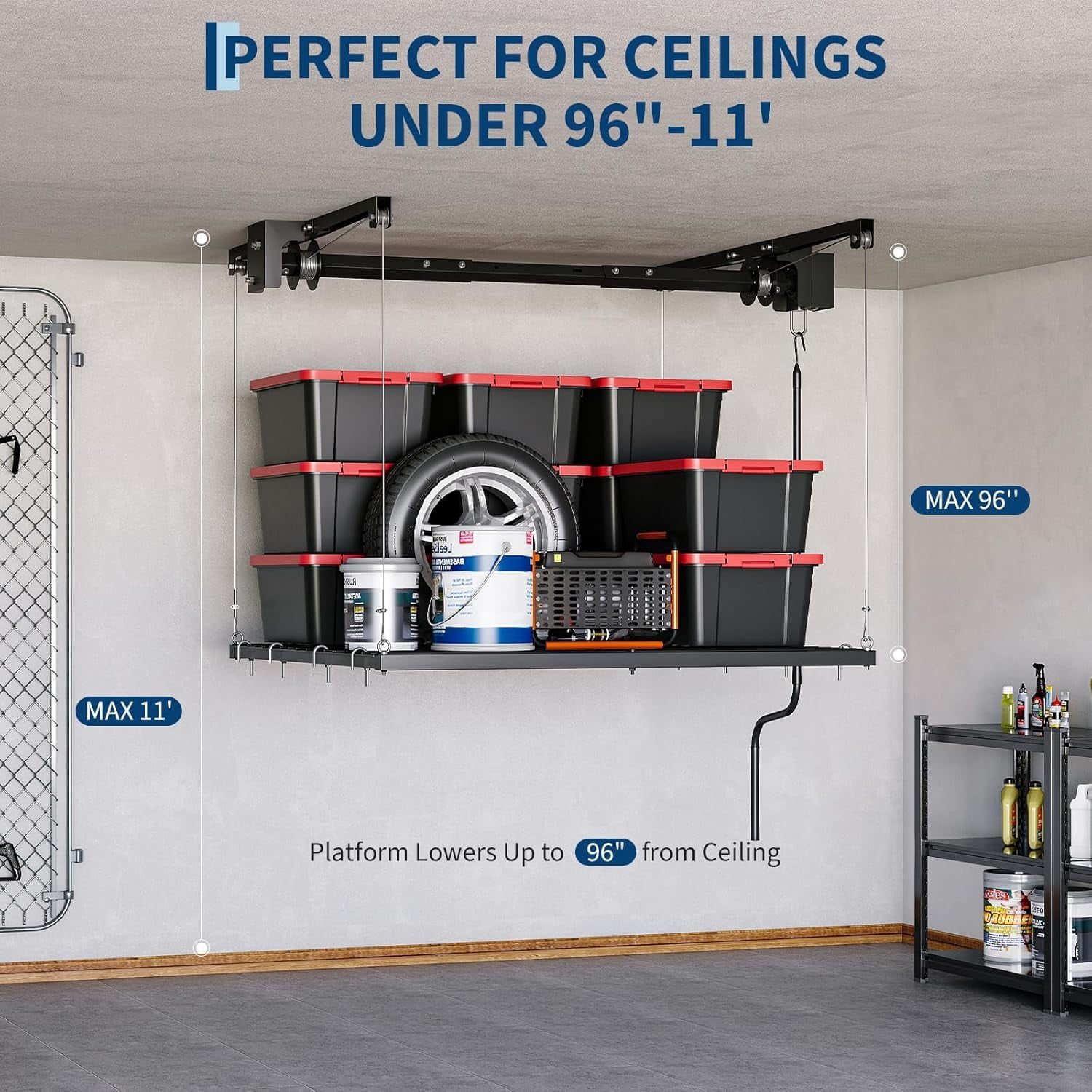 Ceiling-mounted lift systems occupy a distinct niche within garage storage solutions, positioned between passive fixed shelving and fully motorized hoisting equipment that serve different household situations and budgets. Unlike wall-mounted shelving, floor-based cabinets, or mobile carts, an overhead lift preserves both floor space and wall surface while using cubic footage that would otherwise remain empty and difficult to access without climbing. A 4-by-4-foot platform provides 16 square feet of usable storage area—sufficient to hold 6 to 12 plastic storage totes, bicycles, seasonal holiday decorations, camping equipment, or hand tools organized on wall racks. The 300-pound weight capacity safely accommodates most household storage loads without requiring users to spread items across multiple devices or make unnecessary repeated trips to retrieve lighter boxes and containers. Manual crank systems deliver a practical middle ground in the storage market, offering controlled access via human-powered lifting rather than pressing a button or hauling ladders up every time an item is needed. The powder-coat steel frame actively resists rust and corrosion in garages and uninsulated attics, where temperature swings and humidity changes test materials throughout the year and seasonal transitions. Adjustable mounting brackets provide compatibility with standard residential ceiling joist spacing at 16-inch and 24-inch centers, a practical requirement in homes built across different eras and regional construction standards. The dual safety lock system—a primary lock plus an anti-fall latch—secures the platform at any height, preventing drift or unintended descent when items remain stored overhead for extended periods. For homeowners seeking to eliminate clutter from workshop floors and maximize storage in garages, basements, and workshops without major structural work, overhead lift racks bridge the gap between low-cost passive storage and expensive motorized systems. Installation occurs entirely within the footprint of existing ceiling framing, avoiding wall anchors, floor brackets, or permanent attachment requirements to foundations. The modular design allows adjustments to accommodate various ceiling configurations and joist layouts found across residential properties.
We may earn a commission from purchases made through this link. Price and availability are not tracked on this site.
Manual Crank Versus Motorized Systems and Wall-Mounted Alternatives
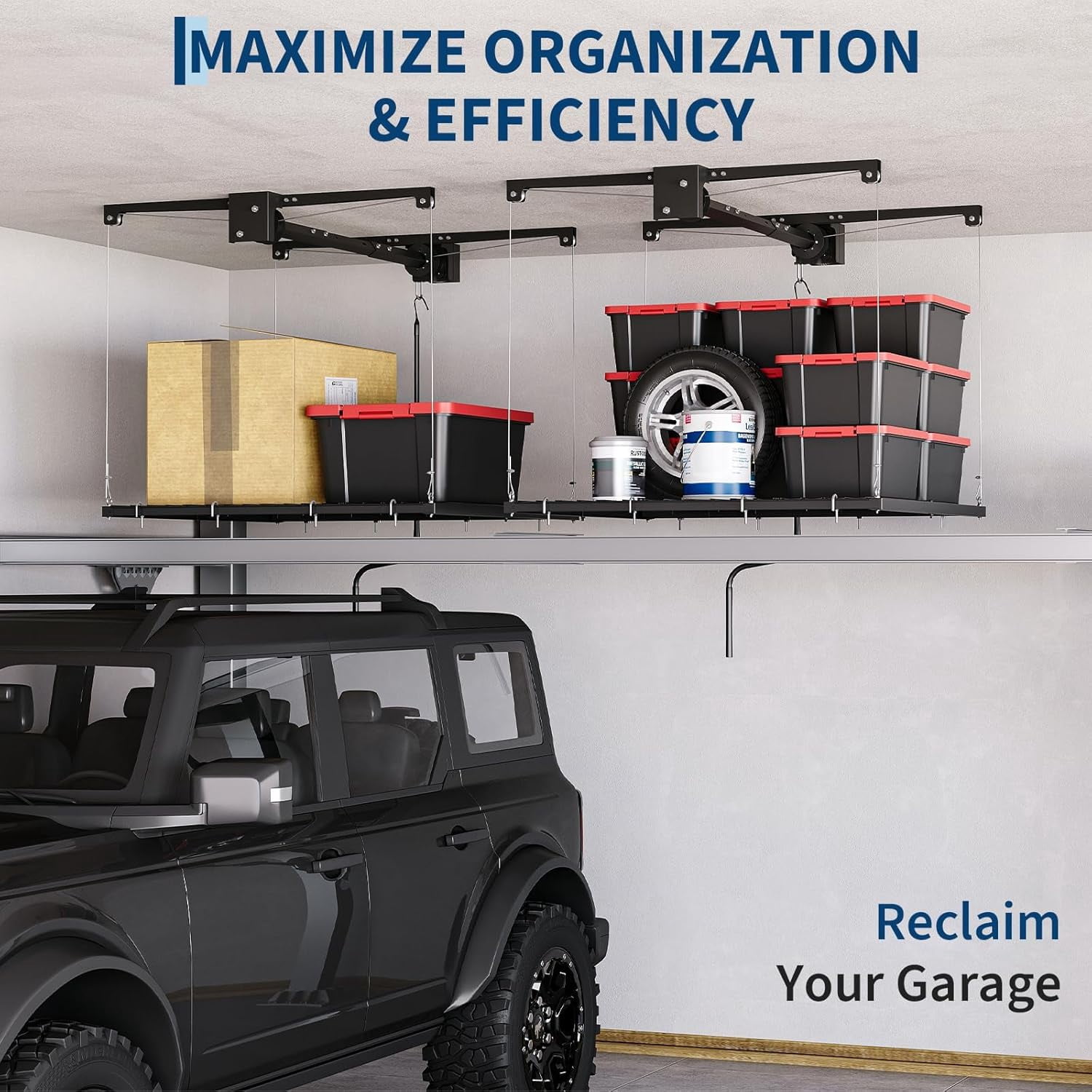 Manual crank operation requires the user to turn a handle to raise or lower the platform, placing the operator in direct control over lifting speed and the ability to stop and reposition the load at any intermediate height. This human-powered approach eliminates the cost, complexity, and electrical requirements of motorized systems, which demand ceiling wiring to dedicated power sources or battery charging routines and introduce additional failure points in motors, switches, and relays. A hand crank generates mechanical advantage through internal gearing, making the task of raising 300 pounds of evenly distributed weight a steady, manageable operation rather than an explosive or jerky lift. Motorized hoists accelerate the lifting process considerably and serve users with limited mobility or those who need to access stored items multiple times per week, but they cost substantially more and often require professional electrical installation. Wall-mounted shelving avoids ceiling installation entirely, leaving overhead airspace untouched and flexible, yet it consumes wall surface and must be deeply braced into studs to hold heavy loads without sagging. Freestanding cabinets and tool chests require no installation at all, preserving visual openness, yet they occupy 12 to 40 square feet of valuable floor space—a substantial footprint in a two-car garage where parking and workflow take priority. Fixed overhead racks mounted permanently to joists offer one-time installation without lowering mechanisms, but they waste access when overhead maintenance is needed or seasonal rearrangement becomes necessary. The manual crank trade-off exchanges slower operation and physical hand-turning for significantly lower cost, simpler installation, zero electrical dependency, and flexibility to reposition items to nearly any ceiling height during a single working session. Homeowners who retrieve overhead items every few days will experience crank operation quite differently than those accessing seasonal boxes once or twice annually; frequency of use fundamentally shapes the practical value of the speed trade-off. The absence of motorized components also means fewer moving parts that require maintenance, lubrication, or eventual replacement over time.
Measure the space and check the stated dimensions before deciding whether this one fits.