Ktaxon 63-Inch Wood Computer Desk: What to Check Before You Buy
Choosing a desk for a spare bedroom or corner office often starts with one question: will this piece fit the space and hold the equipment you plan to use every day? Product photos rarely show the depth, the assembly requirement, or the weight that comes with a wide workstation. This buying guide walks through the details that matter before you decide.
Contents
What This Desk Offers at Its Core
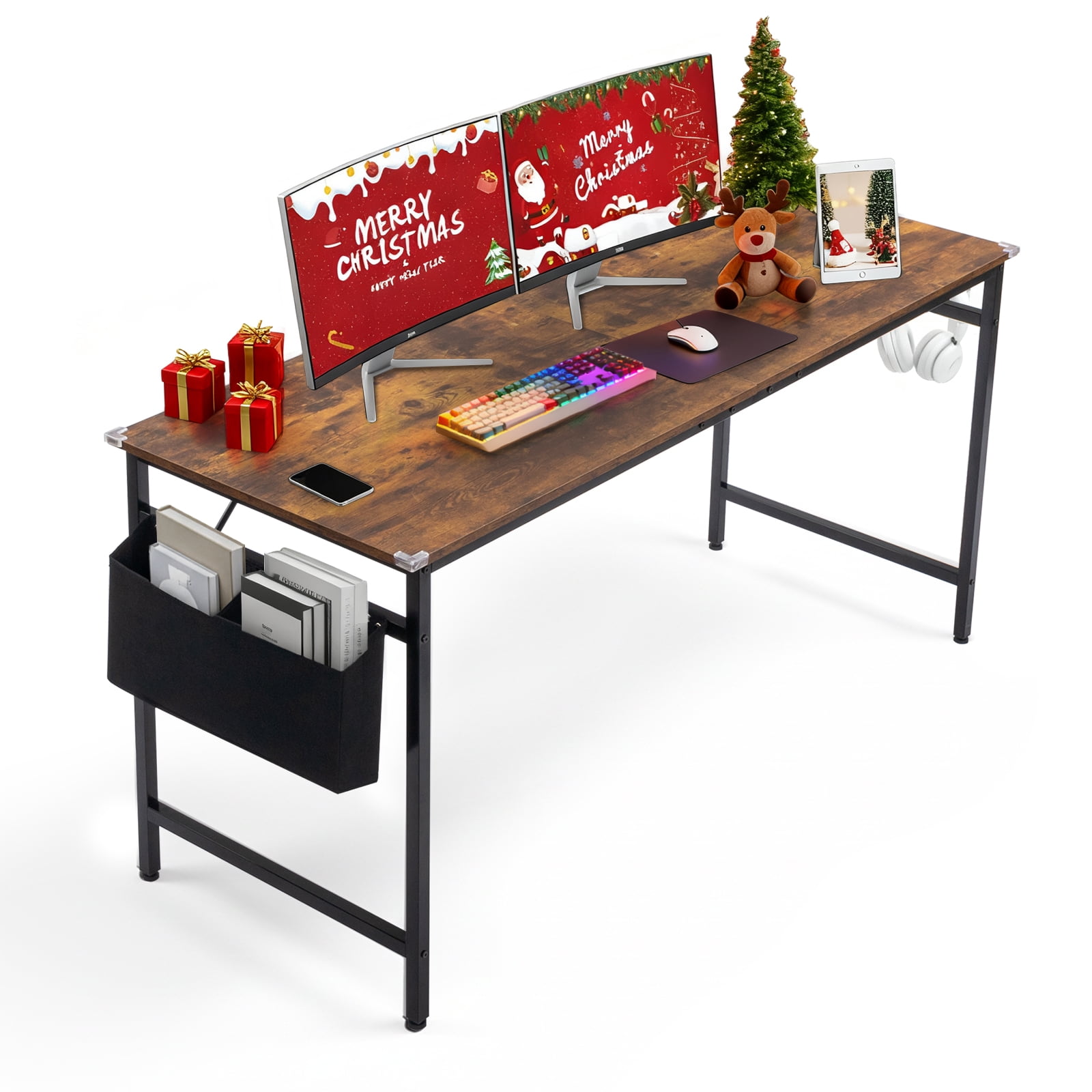
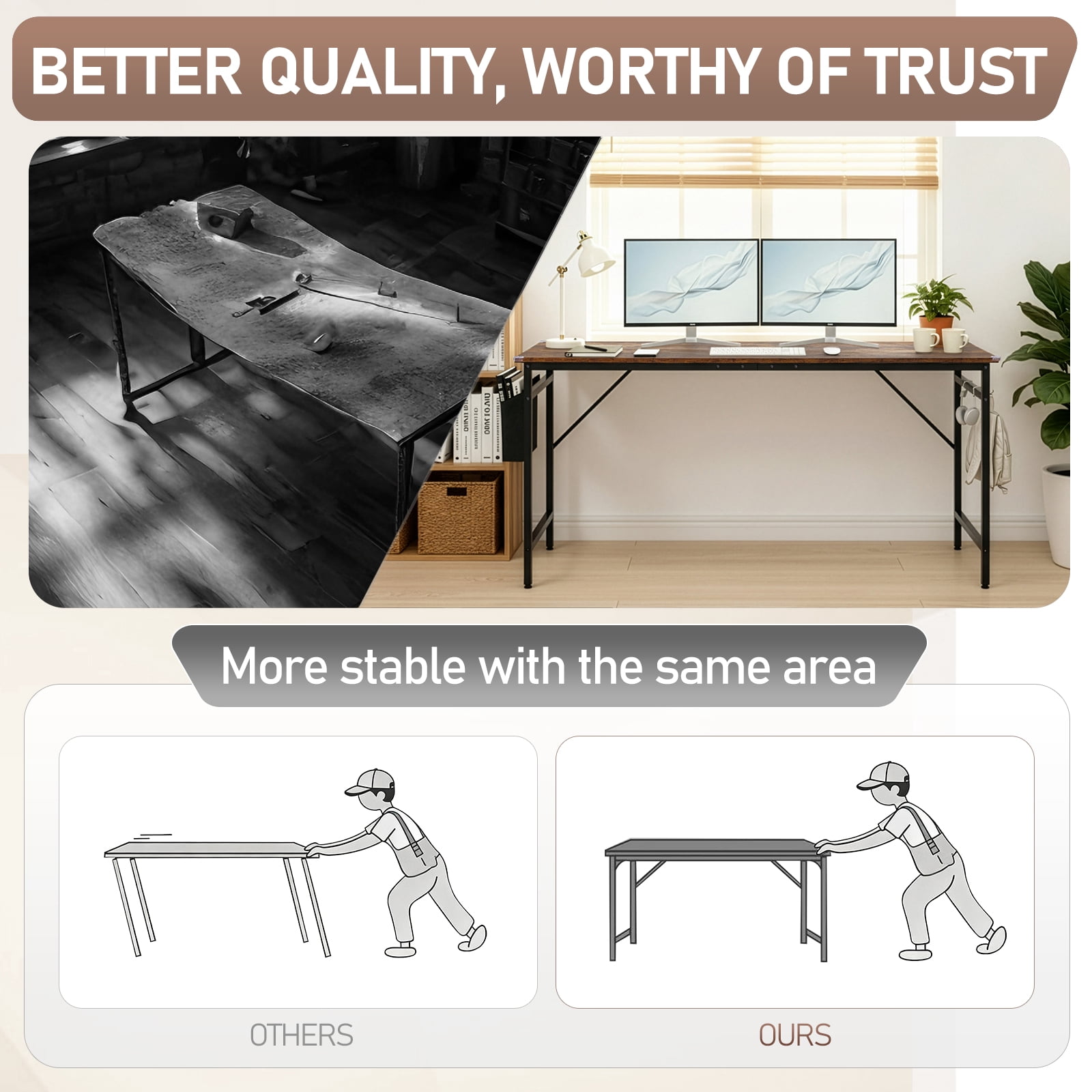
 The Ktaxon 63-inch computer desk is a rectangular workstation with a wood base and an MDF top, listed in a color called Retro. The listing describes it as a computer desk, writing desk, study table, or workstation, so one piece can cover several jobs in the same room. The tabletop is described as 1.97 inches thick, and the product information lists a 50 mm board thickness, which matches that figure. The frame uses 25 by 25 mm tubing and is described as reinforced steel with double support bars, a detail that shapes how the desk feels when you work at the front edge. One shelf is included, giving some extra surface beneath the top for a printer, a router, or stacked paper. The open space underneath is described as room for legs, storage bins, organizers, or a CPU tower. The product information lists an assembled weight of 44.09 pounds, which is heavy enough that moving it alone may be difficult. Nothing else comes in the box: no chair, no hutch, and no height adjustment are listed, so this is a fixed-height desk you pair with your own seating and storage.
Reading the Measurements Against Your Space
 Measurements decide more of this purchase than appearance does. The product information lists the overall size as 62.99 by 23.62 by 30.71 inches, which is also given as 160 by 60 by 75 centimeters. Start with the wall or corner where the desk will sit, and measure the full available length rather than the length you hope for. The tabletop needs room for a monitor and keyboard set up near the front edge, so leave a clear margin on both sides. The 23.62-inch depth gives a shallow working area, so measure from the wall to the front edge and then add the space your chair and knees need when you sit down. Check the 30.71-inch height as well, since the listing does not include a height adjustment. Doorways, hallway turns, and stairwells matter too, because the 44.09-pound desk must pass through the same openings as its packaging. The listing does not state a weight capacity, so do not assume a load rating for the top. Before placing heavy equipment on it, compare the weight of your monitors, speakers, or printer against the manufacturer's information.
We may earn a commission from purchases made through this link. Price and availability are not tracked on this site.
Where It Realistically Fits in a Room
 Placement depends on how you actually work. The listing says the tabletop fits dual monitors and office essentials, so if you plan two screens, measure each monitor stand's footprint and keep a clear strip in front for a keyboard and mouse. A desk this deep usually works best with its back toward a wall, which keeps cables tidy and keeps screens away from the glare of a window. If you use a desktop tower, the space beneath is described as room for one, so place the tower where its ports are reachable and its vents are not pressed against the wall. In a shared room, watch the path you walk each day, because a desk that blocks a closet door or a bed frame becomes an obstacle fast. A corner placement can use awkward space well, but measure the corner depth first, since the chair still needs legroom behind it. Look at where the nearest electrical outlet sits relative to the desk, and plan cable runs with surge protection in mind. Any new outlet or wiring work should be left to a licensed electrician. Finally, consider where a desk lamp will sit, since lighting placed on the side of your writing hand reduces shadows across the work area.
Keeping the Top, Frame, and Pads in Shape
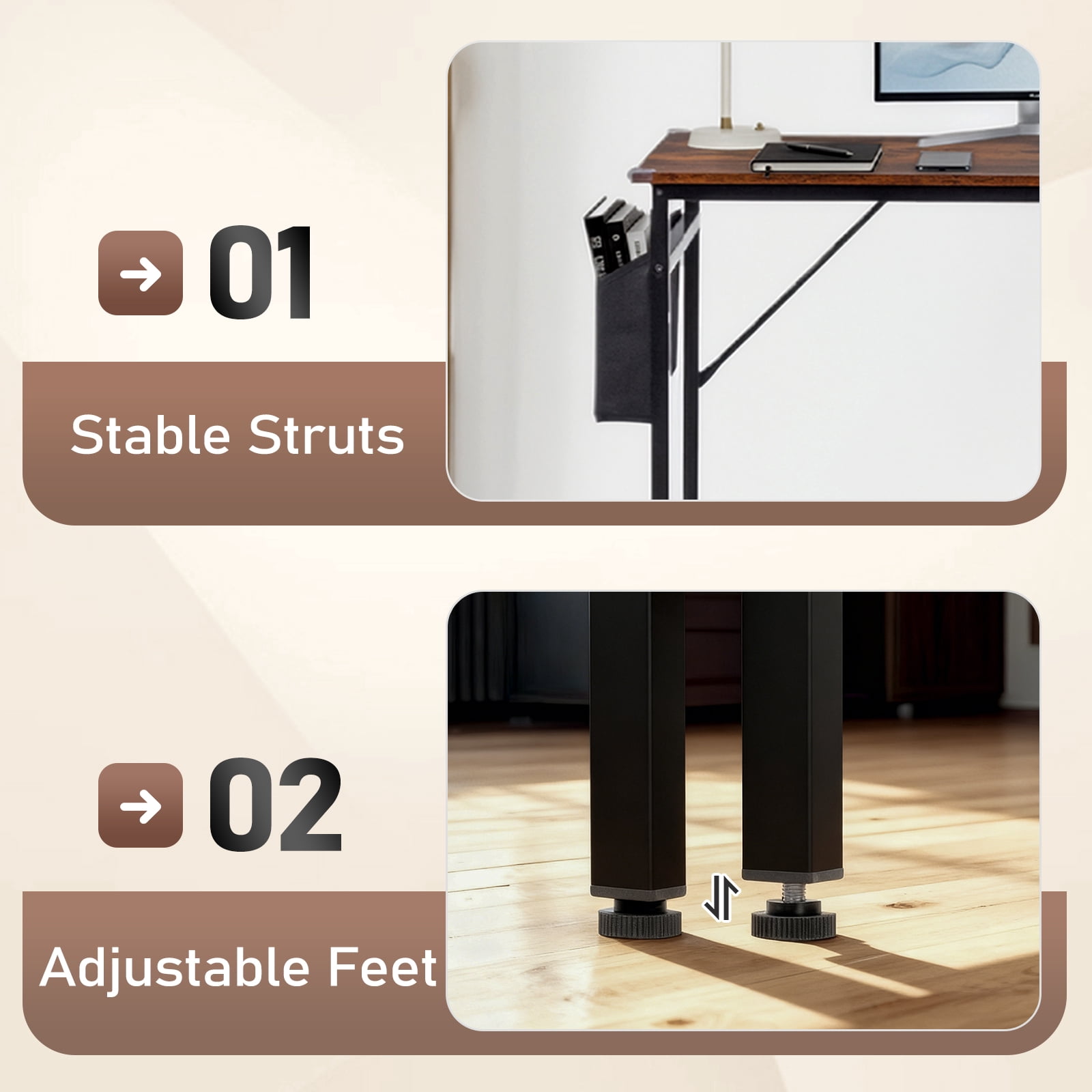
 Upkeep for this desk centers on the surface, the joints, and the floor contact. The listing describes the finish as smooth and easy to clean, so a soft dry cloth handles routine dust, and a barely damp cloth can lift light residue. Avoid soaking the MDF top, because wood-based panels can swell when water sits on the edges or seams. The listing mentions adjustable foot pads, so check them after moving the desk and again after the first few weeks of use. Turn the leveling pads until the top sits flat on hardwood, carpet, or an uneven floor. The foot caps are described as anti-scratch, but grit can still collect beneath them, so vacuum the floor under the desk now and then. Recheck screws and fasteners during routine care, since any furniture held together by hardware can loosen with daily use. Keep the assembly hardware and instruction sheet in a labeled bag, because replacement parts are easier to match when the packaging is still at hand. If you need to store the desk during a move or off-season, plan for disassembly, since the 44.09-pound weight and 63-inch length are awkward to store upright. Keep the parts in a dry, ventilated space, and do not stack heavy items on the panels.
Before you decide, measure the wall or corner, the chair clearance, and the route the desk will take into the room. Confirm that you are comfortable with the assembly requirement, the absence of a chair, hutch, or height adjustment, and the lack of a listed weight capacity. If those numbers fit your space and your equipment, the wide top and single shelf may suit your daily routine.